Granular NPK fertilizers are produced by combining nitrogen, phosphorus, and potassium sources with supporting raw materials that improve granulation, nutrient balance, storage stability, and field performance. Selecting the correct ingredients is one of the most important stages in commercial fertilizer production because every raw material influences the chemical composition and physical quality of the finished product. Manufacturers must consider nutrient concentration, purity, compatibility, moisture level, particle size, cost, and processing behavior when developing granular fertilizer formulations.
Urea is one of the most widely used nitrogen sources in NPK fertilizer production. It contains a high concentration of nitrogen and helps support vegetative growth, leaf development, and protein formation in plants. Ammonium sulfate is another common nitrogen source that also supplies sulfur, an important secondary nutrient required for enzyme activity and amino acid formation. Ammonium nitrate may be used in selected formulations because it provides nitrogen in both ammonium and nitrate forms, although its use depends on local regulations and production conditions.
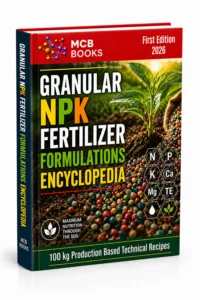
Phosphorus is commonly supplied by monoammonium phosphate and diammonium phosphate. These materials provide both phosphorus and nitrogen, making them useful for developing balanced NPK grades. Phosphorus supports root development, early plant establishment, flowering, seed formation, and energy transfer. The GRANULAR NPK FERTILIZER FORMULATIONS ENCYCLOPEDIA explains how phosphate-based raw materials can be combined with other ingredients to achieve different commercial nutrient ratios.
Potassium chloride, also known as muriate of potash, is one of the most economical and widely used potassium sources. It supports water regulation, enzyme activity, crop quality, and resistance to environmental stress. Potassium sulfate is preferred in chloride-sensitive crops and also supplies sulfur. The selection between potassium chloride and potassium sulfate depends on crop requirements, soil conditions, product positioning, and production cost.
Fillers such as limestone, dolomite, clay, or other mineral carriers may be added to adjust the total formulation weight, improve granule structure, and balance nutrient percentages. Dolomite can also provide calcium and magnesium. Binders are used to help fine particles adhere during granulation and improve granule hardness. Depending on the process, water, steam, lignosulfonates, bentonite, or other suitable binding materials may be used.
Micronutrient compounds containing zinc, boron, iron, manganese, copper, or molybdenum can be incorporated into crop-specific fertilizer products. Although required in smaller quantities, these nutrients play essential roles in photosynthesis, flowering, enzyme systems, and overall plant development. The GRANULAR NPK FERTILIZER FORMULATIONS ENCYCLOPEDIA provides practical guidance for understanding the functions of both primary and secondary fertilizer ingredients.
Anticaking agents, dust-control materials, and coating products are applied to improve flowability, reduce moisture absorption, limit dust formation, and prevent granules from sticking together during storage and transportation. Proper raw material selection helps manufacturers produce stable, uniform, and marketable fertilizers. The GRANULAR NPK FERTILIZER FORMULATIONS ENCYCLOPEDIA is therefore a valuable technical resource for fertilizer manufacturers, agricultural engineers, production managers, researchers, and entrepreneurs seeking reliable information about granular NPK fertilizer formulation and commercial manufacturing.