 Crop-specific granular NPK fertilizer formulations are designed to meet the nutritional requirements of particular crops, growth stages, soil conditions, and production systems. Unlike general-purpose fertilizers, crop-specific products contain carefully selected ratios of nitrogen, phosphorus, and potassium, together with secondary nutrients and micronutrients when required. This targeted approach can improve nutrient-use efficiency, support balanced plant development, increase yield potential, and enhance the commercial quality of harvested crops.
Nitrogen mainly supports vegetative growth, leaf formation, chlorophyll production, and protein synthesis. Phosphorus contributes to root development, early establishment, flowering, energy transfer, and seed formation. Potassium helps regulate water movement, enzyme activity, fruit development, stress tolerance, color, size, and storage quality. The correct ratio of these nutrients varies considerably between cereals, vegetables, fruit trees, industrial crops, greenhouse plants, and ornamental species.
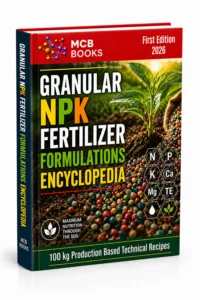
High-nitrogen granular NPK formulations may be preferred during the early vegetative stages of crops with strong leaf and stem growth. Phosphorus-rich fertilizers are often used during planting, transplanting, and root-establishment periods. Potassium-rich formulations may be selected during flowering, fruit development, ripening, and quality-improvement stages. The GRANULAR NPK FERTILIZER FORMULATIONS ENCYCLOPEDIA provides practical technical guidance for developing fertilizer grades suited to different crops and agricultural applications.
For cereal crops such as wheat, maize, and barley, formulations must support early root formation, tillering, stem development, grain filling, and final yield. Vegetable crops may require balanced nutrition combined with additional potassium, magnesium, calcium, sulfur, boron, or zinc. Fruit trees often benefit from formulations adapted to flowering, fruit set, fruit enlargement, color formation, sugar accumulation, and post-harvest quality. Chloride-sensitive crops may require potassium sulfate instead of potassium chloride.
Crop-specific fertilizer development should also consider soil pH, organic matter, nutrient reserves, irrigation quality, local climate, expected yield, and the method of fertilizer application. A formulation suitable for one region or production system may not provide the same results under different conditions. For this reason, soil and plant analyses are valuable tools when selecting nutrient ratios and application programs.
The manufacturing process must produce uniform granules with consistent nutrient distribution, suitable hardness, controlled moisture, low dust, and good storage stability. Raw materials should be compatible with each other and selected according to nutrient content, purity, granulation behavior, and crop safety. The GRANULAR NPK FERTILIZER FORMULATIONS ENCYCLOPEDIA helps manufacturers understand how raw materials and nutrient ratios can be combined to develop market-oriented fertilizer products.
Commercial producers can use crop-specific formulations to expand their product portfolio and serve specialized agricultural markets. Fertilizers may be developed for cereals, vegetables, vineyards, orchards, potatoes, tomatoes, citrus fruits, olives, cotton, and greenhouse crops. The GRANULAR NPK FERTILIZER FORMULATIONS ENCYCLOPEDIA is a valuable resource for fertilizer manufacturers, agricultural engineers, consultants, researchers, and entrepreneurs seeking to produce effective granular NPK fertilizers for higher yield and improved crop quality.