Systemic Herbicides vs Contact Herbicides | How They Work
Herbicides are essential tools in modern agriculture for controlling weeds and improving crop productivity. Among the most important classifications of herbicides are systemic herbicides and contact herbicides. Understanding how these two types work is crucial for selecting the right weed control strategy, as their mode of action, effectiveness, and application methods differ significantly.
Systemic herbicides are designed to be absorbed by the plant and transported throughout its internal system. Once applied, these herbicides enter the plant through leaves or roots and move through the vascular system, reaching all parts of the plant, including roots and underground tissues. This makes systemic herbicides highly effective against perennial weeds, as they can destroy the entire plant rather than just the visible parts. One of the most widely known systemic herbicides is glyphosate, which works by inhibiting a key enzyme required for plant growth, ultimately leading to plant death.
In contrast, contact herbicides only affect the parts of the plant they come into direct contact with. These herbicides act quickly by damaging plant tissues on the surface, leading to rapid wilting and visible injury. However, because they do not move within the plant, contact herbicides may not completely eliminate weeds with deep root systems. As a result, regrowth can occur if the roots remain intact. Contact herbicides are typically used for fast-acting weed control in situations where immediate results are required.
The choice between systemic and contact herbicides depends on several factors, including the type of weeds, growth stage, and environmental conditions. Systemic herbicides are ideal for controlling deep-rooted and perennial weeds, while contact herbicides are more suitable for annual weeds and surface-level control. Additionally, systemic herbicides generally require more time to show visible results, whereas contact herbicides act quickly but may require repeated applications.
From a formulation perspective, both systemic and contact herbicides are available in various forms such as emulsifiable concentrates (EC), suspension concentrates (SC), soluble liquids (SL), wettable powders (WP), and water-dispersible granules (WG). The formulation type influences factors such as absorption, stability, and ease of application. Proper formulation ensures that the herbicide performs effectively under different field conditions.
Environmental and application considerations also play an important role. Systemic herbicides must be applied under conditions that allow sufficient absorption, such as active plant growth and favorable weather. Contact herbicides, on the other hand, require thorough coverage of the plant surface to achieve maximum effectiveness.
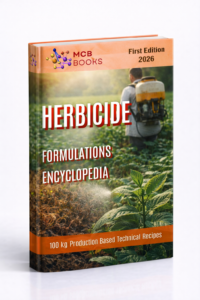
For professionals and manufacturers seeking deeper knowledge of herbicide formulation and industrial production, the Herbicide Formulations Encyclopedia provides comprehensive insights into formulation strategies, raw materials, and proven manufacturing techniques used in the agrochemical industry.
In conclusion, systemic and contact herbicides differ significantly in how they work and how they are applied. Systemic herbicides provide long-lasting control by targeting the entire plant system, while contact herbicides offer rapid results by affecting only the plant surface. Understanding these differences allows users to select the most effective herbicide strategy for their specific agricultural needs.