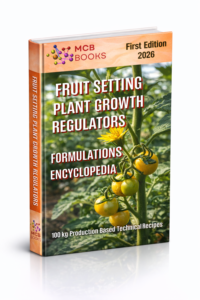
Fruit setting is one of the most critical phases in crop production, directly influencing both yield and fruit quality. In many agricultural systems, plants produce a large number of flowers, but only a portion of these successfully develop into fruits. Environmental stress, nutrient imbalances, poor pollination, and hormonal deficiencies can all lead to flower drop and low fruit set. To overcome these limitations, plant growth regulators (PGRs) are widely used to enhance fruit formation, improve fruit retention, and ensure consistent productivity. Among the many agricultural inputs available today, plant growth regulators specifically designed for fruit setting are considered essential tools in modern farming.
Plant growth regulators are organic compounds that influence plant physiological processes at very low concentrations. They function by mimicking or modifying natural plant hormones, allowing growers to control key developmental stages such as flowering, fruit set, and fruit growth. The most effective PGRs for fruit setting belong to four major groups: auxins, gibberellins, cytokinins, and ethylene-releasing compounds. Each group has a specific role, and when used individually or in combination, they can significantly improve fruit set efficiency.
Auxins are widely regarded as the most important hormones for fruit setting. Compounds such as indole-3-acetic acid (IAA), naphthalene acetic acid (NAA), and indole-3-butyric acid (IBA) are commonly used in agricultural formulations. Auxins promote cell elongation and are directly involved in initiating fruit development from the ovary. One of their key advantages is their ability to induce parthenocarpy, which allows fruit formation without fertilization. This is particularly useful in conditions where pollination is inadequate. Among auxins, NAA is the most commonly used due to its stability and effectiveness in reducing flower drop and improving fruit retention.
Gibberellins, especially gibberellic acid (GA3), are another important group of plant growth regulators used in fruit setting. These compounds stimulate both cell division and elongation, contributing to fruit enlargement and uniform growth. Gibberellins are often used in combination with auxins to enhance overall fruit development. In crops such as grapes, citrus, and apples, GA3 applications are known to increase fruit size and improve market quality. The synergistic effect of auxins and gibberellins makes this combination one of the most widely used strategies in commercial fruit production.
Cytokinins play a supportive but crucial role in fruit setting and development. They promote cell division and help delay the aging process in plant tissues. This ensures that developing fruits receive sufficient nutrients and maintain active growth. Cytokinins are particularly valuable in multi-hormone formulations, where they help balance the effects of auxins and gibberellins. By improving nutrient mobilization within the plant, cytokinins contribute to better fruit quality, size, and shelf life.
Ethylene, commonly associated with fruit ripening, also plays a role in regulating fruit development. Ethephon, an ethylene-releasing compound, is frequently used in agricultural formulations to control physiological processes. In certain crops, ethylene helps synchronize fruit development and improve uniformity. While its role in fruit setting is more indirect compared to auxins and gibberellins, it remains an important component in comprehensive plant growth regulator formulations.
The effectiveness of plant growth regulators depends not only on the active ingredients but also on how they are formulated. Industrial formulations are carefully designed to ensure stability, compatibility, and efficient delivery of active compounds. Liquid formulations are the most commonly used, as they are easy to apply and allow rapid absorption through foliar spraying. These formulations often include solvents such as water or alcohol, along with surfactants that improve spreading and penetration on plant surfaces. Stabilizers are added to protect sensitive hormones from degradation, ensuring consistent performance.
Suspension concentrates are another popular formulation type, offering improved stability and controlled release of active ingredients. These formulations are particularly useful in large-scale agriculture, where long shelf life and consistent performance are important. Water-soluble powders provide a high concentration of active ingredients and are easy to transport and store. Advanced controlled-release formulations represent a newer generation of products, delivering hormones gradually over time and reducing the need for repeated applications.
The manufacturing process of plant growth regulator formulations involves several critical steps. Active ingredients are dissolved or dispersed in a suitable solvent system, followed by the addition of surfactants, stabilizers, and other additives. The mixture is then homogenized to achieve a uniform composition, and pH is carefully adjusted to maintain chemical stability. Filtration is performed to remove impurities, and the final product is packaged under controlled conditions. Each step must be precisely managed to ensure that the formulation remains effective throughout its shelf life.
Application methods are equally important in determining the success of plant growth regulators. Foliar spraying is the most widely used method, as it allows direct absorption of active ingredients through the leaves. Timing is critical, with applications typically carried out during pre-flowering or early flowering stages. Proper dosage is essential, as excessive use can lead to abnormal growth or reduced yield. Understanding crop-specific requirements and environmental conditions is key to achieving optimal results.
The benefits of using plant growth regulators for fruit setting are substantial. They increase the percentage of flowers that develop into fruits, leading to higher yields. They improve fruit size, shape, and uniformity, which are important for market acceptance. They reduce fruit drop, ensuring that more fruits reach maturity. They also enhance plant tolerance to environmental stress, allowing crops to perform better under challenging conditions. These advantages make plant growth regulators an indispensable component of modern agricultural practices.
Despite their benefits, improper use or poor formulation can lead to problems. Inadequate fruit set may result from insufficient hormone concentration or incorrect application timing. Excessive fruit drop may occur due to hormonal imbalance, which can be corrected by using balanced formulations containing multiple hormones. Uneven fruit development can be addressed by incorporating gibberellins, while low yield under stress conditions may require multi-hormone formulations combined with biostimulants. Identifying these issues and applying appropriate solutions is essential for maximizing the effectiveness of plant growth regulators.
Advancements in formulation technology continue to improve the performance of plant growth regulators. Nano-formulations offer enhanced penetration and efficiency, while microencapsulation allows controlled release of active ingredients over time. These innovations reduce the need for frequent applications and improve overall sustainability. The integration of natural biostimulants such as amino acids and seaweed extracts is also becoming increasingly common, providing additional benefits in terms of plant health and productivity.
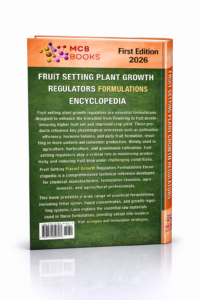
In today’s competitive agricultural environment, the use of high-quality plant growth regulator formulations is essential for achieving consistent and profitable results. Farmers and producers are increasingly relying on scientifically developed products to optimize fruit set and improve crop performance. Access to professional formulation knowledge is therefore a significant advantage. Resources such as the Fruit Setting Plant Growth Regulators Formulations Encyclopedia provide detailed insights into formulation techniques, raw materials, and production processes, helping professionals develop and use effective solutions.
In conclusion, plant growth regulators play a vital role in enhancing fruit setting and improving agricultural productivity. By understanding the functions of different hormones, selecting appropriate formulations, and applying them correctly, it is possible to significantly increase yield and fruit quality. As agricultural technologies continue to evolve, the importance of advanced formulations and professional expertise will continue to grow, making plant growth regulators a cornerstone of modern farming systems.