How to Improve Flowering Efficiency Using Growth Regulators
(Technical Guide)
In crop production, flowering efficiency is not just about the number of blooms—it’s about how uniformly and effectively those flowers develop into productive yield. When flowering is inconsistent or weak, it often leads to poor fruit set and reduced overall performance. Growth regulators are widely used to address this issue, helping plants respond more efficiently during this critical stage.
At the technical level, improving flowering efficiency starts with understanding how plant hormones influence growth. Gibberellins are commonly used to initiate or accelerate the flowering process, especially in crops that show delayed development. Cytokinins play a key role in enhancing flower formation and supporting cell division, which contributes to stronger and more uniform blooms. In some systems, low levels of auxins are included to maintain balance within the plant and improve the overall response to treatment.
However, the effectiveness of growth regulators depends heavily on formulation quality. A well-designed formulation ensures that active ingredients are stable, properly dissolved, and easily absorbed by the plant. Solvents are used to dissolve hormone compounds that are not water-soluble, while surfactants improve spreading and absorption on leaf surfaces. Stabilizers help protect sensitive molecules from degradation, ensuring that the product maintains its performance over time.
Application strategy is another critical factor. Growth regulators are most effective when applied just before the flowering stage or during early bloom development. This timing allows the plant to respond at the right moment, leading to more efficient flowering. Incorrect timing or excessive dosage can reduce effectiveness or even cause plant stress, which is why controlled application is essential.
Environmental conditions also play a role in how well growth regulators perform. Temperature, water quality, and plant health can all influence absorption and response. For this reason, many advanced formulations include additional components such as chelating agents or buffering systems to maintain stability under different conditions.
From a production perspective, achieving consistent flowering efficiency requires precision. Small formulation errors—such as incorrect pH levels or incomplete solubility—can significantly reduce product performance. This is why many professionals prefer to use proven systems rather than relying entirely on trial and error.
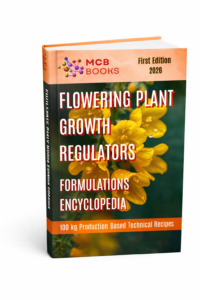
For those looking to develop reliable and effective products, the FLOWERING PLANT GROWTH REGULATORS FORMULATIONS ENCYCLOPEDIA provides ready-to-use formulations and detailed production insights based on real industry practices. It offers a practical way to create high-performance growth regulator systems without unnecessary risk.
In the end, improving flowering efficiency is about combining the right formulation with proper application and environmental awareness. When these factors are aligned, the result is stronger flowering, better crop uniformity, and increased yield potential.