 The commercial production of soil conditioner fertilizers requires a combination of correct raw material selection, formulation knowledge, controlled manufacturing procedures and consistent quality standards. Soil conditioners are developed to improve the physical, chemical and biological characteristics of agricultural soils and may be produced in liquid, suspension, powder or granular forms. For manufacturers entering this market, understanding the complete production process is essential for developing stable, effective and commercially viable products.
The first stage in soil conditioner fertilizer manufacturing is determining the intended function of the final product. Some formulations are designed to improve soil structure and aggregation, while others target organic matter content, nutrient availability, water retention, root-zone conditions, salinity management or soil pH balance. The intended application determines which raw materials should be included and at what concentrations.
Common ingredients used in soil conditioner formulations include humic acid, fulvic acid, organic matter sources, gypsum, calcium compounds, magnesium sources, biochar, amino acids, seaweed extracts, mineral carriers and selected micronutrients. Each raw material must be evaluated for purity, solubility, compatibility and its specific function within the formulation. Incorrect combinations can cause precipitation, sedimentation, excessive viscosity or poor product stability.
For liquid soil conditioner production, manufacturing generally begins by adding the required amount of water to a mixing tank. Water-soluble ingredients are introduced gradually under continuous agitation. Humic substances, organic materials, mineral components and functional additives are then incorporated in the correct sequence. During production, parameters such as pH, viscosity, density and dispersion must be monitored carefully.
Suspension products require additional attention to particle size and sedimentation control. Appropriate dispersing, suspending and stabilizing systems may be necessary to maintain uniformity during storage. Powder and granular soil conditioners follow different processes that may include dry blending, grinding, granulation, drying, screening and coating.
Quality control is another critical part of commercial soil conditioner fertilizer production. Finished products should be tested for appearance, pH, density, moisture, particle size, nutrient content, stability and other parameters relevant to the product type. Batch-to-batch consistency is especially important when manufacturing products for professional agricultural markets.
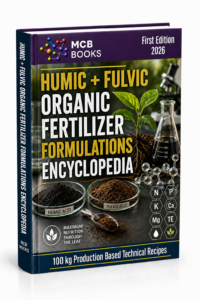
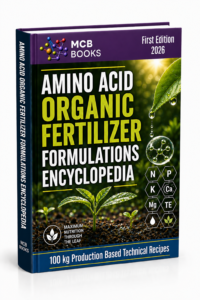
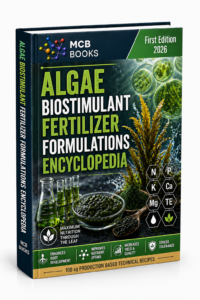
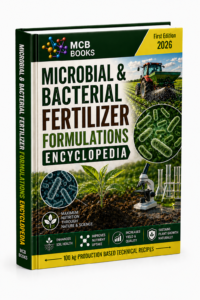
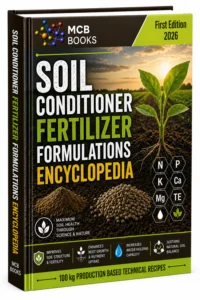
The SOIL CONDITIONER FERTILIZER FORMULATIONS ENCYCLOPEDIA provides practical production information and formulation examples based on 100 kg manufacturing quantities. These formulations can serve as a structured starting point for laboratory development, pilot-scale trials and industrial production planning.
For fertilizer manufacturers, agricultural input companies and entrepreneurs, having access to organized formulation and manufacturing information can reduce unnecessary trial-and-error work. The encyclopedia offers a practical technical reference for companies that want to understand how to manufacture soil conditioner fertilizers, develop different product types and establish a professional approach to commercial agricultural production.