 Creams, lotions and serums are among the most important product forms in the professional skin care market. Although they may appear similar from a consumer perspective, each product type has a different formulation structure, ingredient balance and manufacturing requirement. Developing stable dermocosmetic cream, lotion and serum formulations therefore requires careful selection of raw materials together with controlled production methods.
Dermocosmetic creams are generally emulsified systems containing water and oil phases. The oil phase may include cosmetic oils, esters, emollients, fatty alcohols and other conditioning ingredients, while the water phase commonly contains purified water, humectants and water-soluble active materials. Emulsifiers and co-emulsifiers are used to create and maintain a stable structure. Depending on the formulation, thickeners, stabilizers, preservatives, antioxidants and pH regulators may also be necessary.
Lotions usually have a lighter viscosity and lower oil-phase content compared with creams. They are designed to spread easily over the skin and may be suitable for facial or body applications. Lotion formulations can contain humectants such as glycerin and hyaluronic acid, together with emollients, botanical extracts, niacinamide, panthenol, vitamins and other functional cosmetic ingredients.
Serums are typically formulated as lightweight products with a high proportion of water-soluble or dispersed active ingredients. Hyaluronic acid, niacinamide, peptides, antioxidants, panthenol and botanical extracts are commonly used in serum concepts. The formulation may require polymers, rheology modifiers, solubilizers or chelating agents to achieve the desired texture and stability.
Manufacturing methods vary according to product structure. Creams and lotions may require separate preparation of oil and water phases followed by controlled heating, emulsification and homogenization. After the emulsion has formed, the batch is usually cooled gradually before heat-sensitive ingredients are added. Mixing speed and temperature should be controlled carefully to prevent instability or undesirable changes in texture.
Serum manufacturing often involves hydration or dispersion of polymers before active ingredients are added. Ingredients must be introduced in the correct sequence to prevent clumping, precipitation or incompatibility. Final pH adjustment is especially important because many active ingredients and thickening systems perform optimally only within specific pH ranges.
Quality control should include evaluation of appearance, odor, pH, viscosity, homogeneity, emulsion stability and storage behavior. Packaging compatibility should also be assessed, particularly for formulations containing sensitive active ingredients.
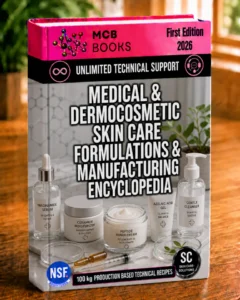
The MEDICAL & DERMOCOSMETIC SKIN CARE FORMULATIONS & MANUFACTURING ENCYCLOPEDIA provides practical 100 kg cream, lotion and serum formulations, together with raw material functions, production procedures, product specifications and technical characteristics.
For cosmetic manufacturers, private-label companies and formulation specialists, understanding the differences between cream, lotion and serum manufacturing methods is essential for developing professional dermocosmetic products with appropriate texture, stability and commercial quality.