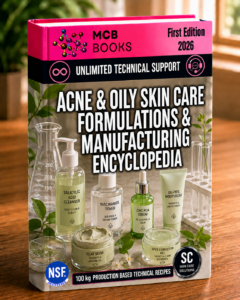
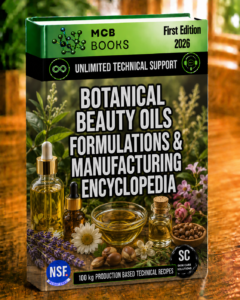
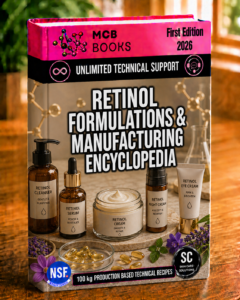
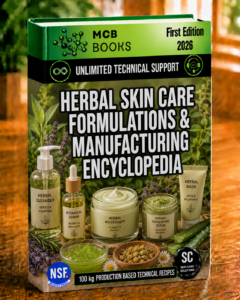
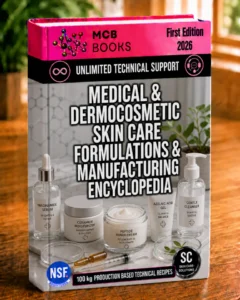
 The professional skin care industry continues to expand as consumers increasingly seek advanced products for hydration, skin barrier support, uneven skin tone, aging concerns, oily skin and other specific cosmetic needs. Developing reliable dermocosmetic products, however, requires much more than simply combining active ingredients. Successful medical and dermocosmetic skin care production depends on formulation knowledge, raw material compatibility, manufacturing methods, stability control and consistent product quality.
The MEDICAL & DERMOCOSMETIC SKIN CARE FORMULATIONS & MANUFACTURING ENCYCLOPEDIA has been developed as a practical technical reference for professionals, manufacturers and entrepreneurs who want to understand the formulation and production of modern skin care products. It provides structured information for developing professional cosmetic products using different active ingredients, functional raw materials and manufacturing systems.
Dermocosmetic formulations may include creams, lotions, serums, gels, emulsions, cleansers, masks and specialized skin care products. Each product type requires a different formulation strategy. Creams and lotions generally depend on carefully balanced oil and water phases, emulsifiers, thickeners and stabilizers, while serums and gels may require humectants, polymers, active ingredients and suitable preservation systems.
Raw material selection is one of the most important stages of professional skin care formulation. Ingredients such as hyaluronic acid, niacinamide, panthenol, ceramides, peptides, antioxidants, botanical extracts, vitamins, emollients, humectants and conditioning agents may be used depending on the intended product concept. Manufacturers must also consider emulsifiers, surfactants, rheology modifiers, preservatives, chelating agents and pH regulators to obtain stable and commercially acceptable products.
The production process also has a major influence on final product quality. Temperature, mixing speed, homogenization, phase addition order, cooling conditions and pH adjustment must be carefully controlled. Incorrect manufacturing procedures can cause emulsion separation, viscosity changes, precipitation, poor texture or reduced storage stability.
Quality control is therefore an essential part of dermocosmetic skin care manufacturing. Finished products may be evaluated for appearance, color, odor, pH, viscosity, density, emulsion stability and other parameters relevant to the formulation. Stability testing is particularly important before commercial production because cosmetic products must maintain their physical and chemical properties throughout their intended shelf life.
The MEDICAL & DERMOCOSMETIC SKIN CARE FORMULATIONS & MANUFACTURING ENCYCLOPEDIA provides practical formulations based on 100 kg production quantities, helping manufacturers understand ingredient ratios and adapt formulations to pilot or industrial production. It also explains raw material functions, production procedures, product specifications and technical characteristics.
For cosmetic manufacturers, private-label companies, formulation specialists and entrepreneurs planning to develop professional skin care products, organized technical formulation knowledge can significantly reduce unnecessary trial-and-error work. The encyclopedia provides a practical foundation for understanding how to manufacture dermocosmetic skin care products, develop different product categories and establish a more systematic approach to commercial skin care production.