 The commercial production of medical and dermocosmetic skin care products requires a structured approach based on formulation science, raw material compatibility, controlled manufacturing procedures and consistent quality standards. Unlike simple cosmetic mixtures, professional dermocosmetic products are often developed to address specific skin concerns such as dryness, barrier weakness, uneven skin tone, excess oil, sensitivity and visible signs of aging.
The first stage in dermocosmetic skin care manufacturing is defining the intended function and product form. Depending on the concept, manufacturers may develop creams, lotions, serums, gels, cleansers, masks, emulsions or other specialized skin care products. Each form requires a different technical structure and therefore a different selection of ingredients and production methods.
Raw material selection is one of the most important parts of the manufacturing process. Dermocosmetic formulations may include hyaluronic acid, niacinamide, panthenol, ceramides, peptides, vitamins, antioxidants, botanical extracts, humectants, emollients and conditioning agents. Functional ingredients such as emulsifiers, surfactants, thickeners, rheology modifiers, preservatives, chelating agents and pH regulators may also be necessary to achieve the desired texture, stability and shelf life.
For cream and lotion production, the formulation is generally divided into water and oil phases. These phases are heated separately when required and combined under controlled mixing or homogenization. The correct emulsification temperature, mixing speed and addition sequence are important for producing a stable emulsion. Heat-sensitive ingredients are usually incorporated during the cooling stage according to their technical requirements.
Serums and gels require a different manufacturing approach. Water-soluble active ingredients, humectants and polymers must be dispersed correctly to avoid clumping or instability. The final pH should also be adjusted carefully because the effectiveness and stability of certain cosmetic ingredients can depend strongly on the pH range of the formulation.
Quality control is essential for commercial skin care production. Finished products may be tested for appearance, odor, color, pH, viscosity, density, homogeneity, emulsion stability and storage behavior. Manufacturers should also evaluate compatibility between the formulation and its packaging before large-scale production.
Scaling is another important consideration. A successful laboratory sample does not automatically behave in the same way when produced in larger tanks. Mixing efficiency, shear rate, heating and cooling times, homogenization and raw material addition order may need to be optimized during pilot and industrial production.
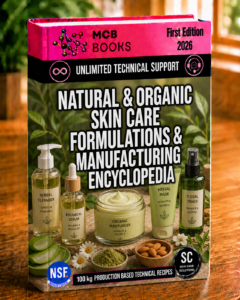
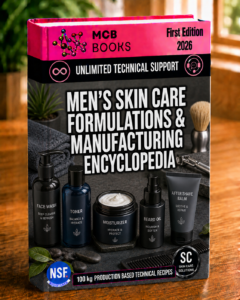
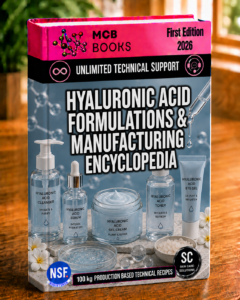
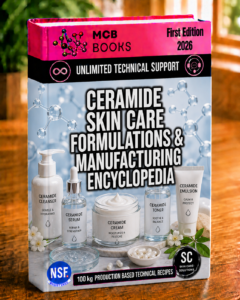
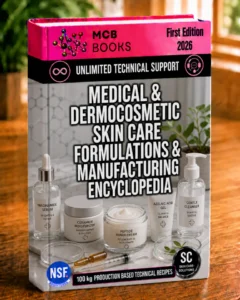
The MEDICAL & DERMOCOSMETIC SKIN CARE FORMULATIONS & MANUFACTURING ENCYCLOPEDIA provides practical formulation examples based on 100 kg production quantities, together with raw material functions, manufacturing procedures, product specifications and technical characteristics.
For cosmetic manufacturers, private-label producers, formulation specialists and entrepreneurs, access to organized production knowledge can simplify product development and reduce unnecessary trial-and-error work. The encyclopedia provides a practical technical foundation for understanding how to manufacture medical and dermocosmetic skin care products for commercial production and develop professional products suitable for modern cosmetic markets.