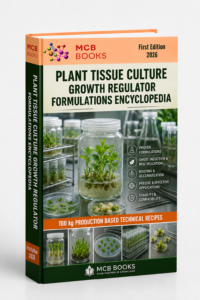
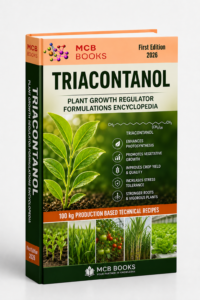
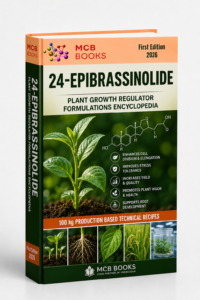
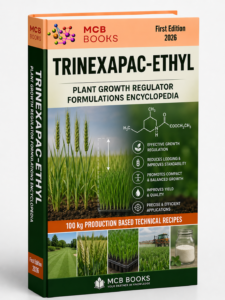
 Indole-3-Butyric Acid (IBA) is a widely used auxin-type plant growth regulator that plays an important role in root initiation, cutting propagation, transplant establishment and early plant development. Manufacturing stable and effective IBA products requires careful selection of the formulation system, suitable raw materials, controlled processing conditions and appropriate quality control procedures. Commercial products may be developed in different forms according to their intended agricultural or horticultural use.
The first stage in manufacturing an IBA plant growth regulator is determining the required product type and active ingredient concentration. Depending on the application, IBA may be formulated as soluble concentrates, liquid concentrates, suspension concentrates, rooting solutions, dipping products or other specialized formulations. Since IBA has limited direct solubility in water, the formulation system must be designed to provide adequate dissolution, dispersion and long-term stability.
Typical raw materials used in IBA formulations may include the active ingredient Indole-3-Butyric Acid, suitable solvents or co-solvents, water, surfactants, wetting agents, dispersing agents, emulsifiers, stabilizers, preservatives, buffering agents and pH regulators. The exact selection of ingredients depends on the required formulation type, target concentration, application method and desired storage characteristics. Each raw material should be compatible with the active ingredient and should support the physical and chemical stability of the finished product.
Commercial manufacturing normally begins by charging the required quantity of solvent, water or carrier phase into a clean stainless-steel mixing vessel. Agitation is started, and selected functional additives are incorporated according to the formulation design. IBA is then dissolved or dispersed under controlled mixing conditions. Depending on the product, additional surfactants, stabilizers and other auxiliaries are introduced gradually until a uniform mixture is obtained.
Process parameters such as mixing speed, temperature, pH and ingredient addition sequence can influence the quality of the final formulation. Excessive temperatures should generally be avoided unless specifically required by the formulation because unnecessary heat may affect product stability. For suspension-type formulations, high-shear mixing may be necessary to obtain the required particle distribution and prevent sedimentation during storage.
After manufacturing, the product should undergo quality control testing. Typical parameters include appearance, color, odor, pH, density, active ingredient concentration, homogeneity, physical stability and storage stability. Depending on the formulation, additional tests may include viscosity, suspensibility, emulsion stability or low-temperature and accelerated storage assessments.
Packaging is another important part of commercial production. Suitable containers should protect the formulation from contamination, moisture, excessive heat and light while maintaining product integrity during transportation and storage.
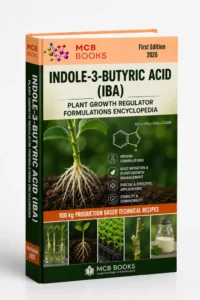
The INDOLE-3-BUTYRIC ACID (IBA) PLANT GROWTH REGULATOR FORMULATIONS ENCYCLOPEDIA provides practical technical guidance on IBA formulations, raw material selection, production processes, application systems and commercial manufacturing principles. With properly designed formulations and controlled production methods, manufacturers can develop reliable IBA plant growth regulator products for professional propagation, nursery production, horticulture and agricultural applications.