 Plant tissue culture growth regulators are essential components in modern micropropagation, plant biotechnology, nursery production and laboratory-based plant regeneration systems. These products are used to control important physiological processes such as cell division, callus formation, shoot initiation, shoot multiplication, rooting and organogenesis. Manufacturing reliable plant tissue culture growth regulator formulations requires precise concentration control, suitable raw materials, appropriate solvent systems and carefully managed production conditions.
The first stage of manufacturing is determining the intended biological function of the finished product. Tissue culture growth regulators are generally based on auxins, cytokinins, gibberellins or combinations of these compounds. Common auxins include Indole-3-Acetic Acid (IAA), Indole-3-Butyric Acid (IBA), 1-Naphthaleneacetic Acid (NAA) and 2,4-Dichlorophenoxyacetic Acid (2,4-D). Cytokinins such as 6-Benzylaminopurine (6-BA/BAP) and kinetin are frequently used for shoot induction and multiplication, while gibberellic acid may be incorporated into formulations intended for specific elongation or developmental responses.
Raw materials used in commercial tissue culture growth regulator formulations may include the selected active plant growth regulator, purified or deionized water, suitable solvents and co-solvents, pH-adjusting materials, stabilizers, buffering agents and other formulation auxiliaries. Because different plant growth regulators have different solubility characteristics, solvent selection is particularly important. Some compounds may require controlled pH adjustment or suitable co-solvents to obtain complete dissolution and a stable concentrated solution.
Commercial manufacturing generally begins by charging the required quantity of purified water or selected solvent system into a clean production vessel. Agitation is started, and the active ingredient is gradually added under controlled conditions. Where necessary, pH modifiers or co-solvents are introduced to improve solubility. Additional stabilizers or supporting ingredients are then incorporated, and mixing continues until a clear and homogeneous product is obtained.
Accuracy is extremely important in plant tissue culture formulations because growth regulators are often used at relatively low concentrations in culture media. Variations in active ingredient concentration can significantly affect plant response. For this reason, weighing equipment, mixing systems and batch-control procedures should provide a high level of precision and reproducibility.
Depending on the intended product, manufacturers may produce concentrated stock solutions, ready-to-dilute liquid concentrates, individual hormone solutions or specialized mixtures containing more than one growth regulator. Auxin-to-cytokinin balance is especially important in tissue culture. Higher auxin levels may favor rooting or callus development, while relatively higher cytokinin levels may promote shoot formation and multiplication. Formulations must therefore be designed according to the intended culture stage and target plant response.
After mixing, filtration may be used to improve clarity and remove unwanted particulate matter. Where products are intended for sensitive laboratory applications, contamination control, suitable manufacturing hygiene and appropriate packaging are important considerations.
Quality control may include active ingredient analysis, pH measurement, appearance, clarity, density, homogeneity and storage stability. Finished products should also be evaluated for compatibility with commonly used tissue culture media and for stability under recommended storage conditions.
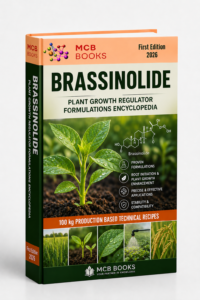
The PLANT TISSUE CULTURE GROWTH REGULATOR FORMULATIONS ENCYCLOPEDIA provides practical technical information on formulation systems, raw material selection, manufacturing procedures and commercial production principles. It serves as a useful reference for companies and professionals developing plant tissue culture growth regulators for shoot induction, rooting, callus formation, micropropagation and plant regeneration applications.