 HOW TO MAKE HOT MELT ADHESIVES (HMA)
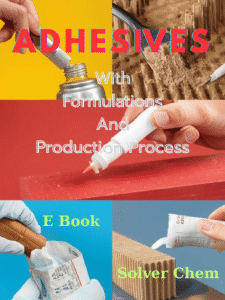
Hot melt adhesives (HMA) are thermoplastic bonding materials that are applied in molten form and solidify upon cooling, creating instant adhesion. They are widely used in packaging, woodworking, bookbinding, hygiene products, textiles, and product assembly due to fast-setting, solvent-free structure and high thermal stability.
Meaning & Definition of Hot Melt Adhesives
Hot melt adhesives are solvent-free thermoplastic adhesive systems that melt at elevated temperatures (typically 120–180°C) and solidify rapidly after application. They rely on polymer crystallization and viscosity changes to create mechanical bonding strength.
Raw Materials for Hot Melt Adhesive Production
Common ingredients include:
-
Base Polymers: EVA (ethylene-vinyl acetate), Polyolefin (APO/APAO), SBC (SIS, SBS), Polyamide, Polyester
-
Tackifiers: Hydrocarbon resins, rosin esters, terpene resins
-
Plasticizers: Mineral oils, polybutene
-
Waxes: Paraffin wax, microcrystalline wax, synthetic waxes
-
Stabilizers: Antioxidants (BHT, Irganox types)
Each raw material controls open time, setting speed, viscosity, adhesion strength, heat resistance, and substrate compatibility.
Steps to Make Hot Melt Adhesives
Below is the simplified and industrially valid process:
1. Polymer Melting
-
Base polymer (EVA / APO / SBC) is loaded into a double-jacketed high-temperature mixer.
-
Heat to 150–180°C until fully molten.
2. Addition of Tackifiers
-
Add tackifying resins slowly under strong agitation.
-
Maintain temperature to ensure homogeneous blending.
3. Incorporation of Waxes & Plasticizers
-
Add waxes to adjust viscosity and set time.
-
Add plasticizers to improve flexibility and wetting.
4. Stabilizer Addition
-
Antioxidants are added at the final stage to prevent degradation.
5. Homogenization
-
Mix for 20–40 minutes until the adhesive becomes fully uniform.
6. Filtration
-
Melt is filtered to remove impurities.
7. Packaging
-
Packed in pellets, pillows, granules, blocks, cartridges depending on application.
Properties of Hot Melt Adhesives
-
Fast setting
-
Solvent-free & environmentally friendly
-
High initial tack
-
Adjustable viscosity
-
Good thermal stability
-
Long pot life
-
Excellent bonding to plastics, paper, wood, fabrics
Applications of Hot Melt Adhesives
Hot melt adhesives are used in:
Packaging
-
Carton sealing
-
Case & tray forming
-
Food packaging
Woodworking
-
Edge banding
-
Furniture assembly
Bookbinding
-
Spine gluing
-
Cover attachment
Textiles & Hygiene
-
Diapers
-
Feminine hygiene products
-
Non-woven bonding
Product Assembly
-
Electronics
-
Filters
-
Automotive interior components
Advantages of Hot Melt Adhesives
-
Very fast curing
-
No drying time
-
Easy application
-
High productivity
-
Long shelf life
-
Low VOC and eco-friendly structure
Summary
Hot melt adhesives are thermoplastic bonding systems applied in molten form and solidified by cooling. Production involves melting the polymer, adding tackifiers, waxes, plasticizers, and antioxidants to obtain desired performance characteristics. HMAs are widely used across packaging, woodworking, textiles, hygiene, and industrial assembly due to fast set time, strong adhesion, and solvent-free composition.