
INTRODUCTION
Liquid urea fertilizer formulation is one of the most widely used nitrogen systems in modern agriculture. It is preferred because of its fast absorption, ease of application, and high efficiency in crop nutrition.
Liquid urea fertilizer formulation is widely used in industrial agriculture due to its efficiency and high nitrogen content.
At first glance, producing liquid urea fertilizers may seem simple. Many sources suggest basic mixing methods or short recipes.
However, real production is not that straightforward.
Developing a stable and effective liquid urea system requires more than just dissolving urea in water. It involves balancing concentration, stability, compatibility, and application performance.
This is where most basic formulations fail.
Liquid Urea Fertilizer Formulation Basics
Micronutrient Fertilizer Systems

Understanding Liquid Urea Systems
Liquid urea fertilizers are primarily based on high nitrogen content dissolved in water. But the formulation is not only about solubility.
Several factors must be considered:
- concentration balance
- crystallization control
- storage stability
- compatibility with other nutrients
Even small changes in these parameters can affect the final product performance.
Foliar Fertilizer Formulation Systems
Why Basic Formulations Are Not Enough
Many people attempt to create liquid fertilizers using simple approaches.
They focus only on dissolving raw materials without considering how the system behaves over time.
This often leads to:
- crystallization problems
- instability during storage
- inconsistent application results
In industrial production, these issues are avoided by using structured formulation systems rather than simple mixtures.
From Raw Materials to Real Systems
Understanding liquid systems also requires knowledge of how raw materials are structured into complete fertilizer formulations.
👉 fertilizer raw materials and ingredients
Once you see how different components work together, formulation becomes much more predictable and consistent.
Production Approach
In real production environments, liquid urea fertilizers are prepared through controlled mixing and stabilization steps.
The process typically includes:
- preparing the base solution
- controlling temperature and dissolution
- adjusting concentration levels
- ensuring homogeneity
Each step plays a role in achieving a stable and effective final product.
SUMMARY
Liquid urea fertilizer formulation may seem simple, but achieving consistent and reliable results depends on how well the system is designed.
Working with complete formulation structures instead of basic mixtures is the key to developing successful products.
In real fertilizer production, liquid urea systems are only one part of a larger formulation landscape.
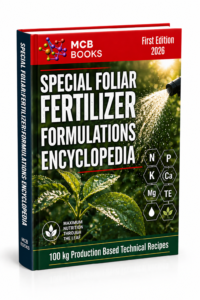
The MICRONUTRIENTS FERTILIZERS FORMULATIONS ENCYCLOPEDIA and SPECIAL FOLIAR FERTILIZER FORMULATIONS ENCYCLOPEDIA provide complete formulation systems used in industrial applications.
These systems include nutrient balancing, stability design, and production-ready approaches that help create reliable and commercially viable fertilizer products.