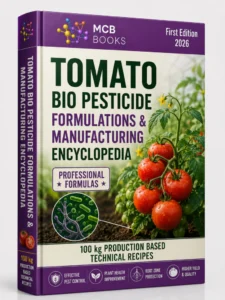
 Tomato crops are affected by many economically important pests and diseases, including whiteflies, aphids, thrips, spider mites, caterpillars, leaf miners, powdery mildew, Botrytis, early blight, late blight and several soil-borne pathogens. Biological pesticides offer an alternative or complementary approach to conventional chemical crop protection. Manufacturing effective products requires the correct selection of biological active ingredients, formulation auxiliaries, processing conditions and quality-control procedures.
The first step in developing a tomato bio pesticide is defining the target pest or disease. Bio insecticide formulations may contain microorganisms such as Beauveria bassiana, Metarhizium anisopliae or selected Bacillus species, while biological fungicides may use Bacillus subtilis, Bacillus amyloliquefaciens, Trichoderma harzianum or related beneficial microorganisms. Botanical formulations may also contain neem-derived materials, plant extracts, essential oils and naturally occurring active compounds. The biological ingredient should be selected according to its intended function, compatibility with other components and required application method.
Commercial formulations normally contain more than the biological active material. Suitable carriers, emulsifiers, dispersing agents, wetting agents, stabilizers, suspending agents, preservatives, antifoaming agents and pH-adjusting materials may be required. In microbial products, the supporting formulation system must protect microorganism viability during processing and storage. Excessive levels of preservatives, unsuitable surfactants, high temperatures or extreme pH values can reduce biological activity.
The manufacturing process depends on whether the final product is a liquid suspension, soluble concentrate, oil-based formulation, wettable powder or another delivery system. Liquid products are commonly produced by preparing the aqueous or oil phase first, followed by controlled addition of stabilizers and other auxiliaries. Mixing and homogenization should create a uniform product without excessive shear or heat generation. Microbial active ingredients are often incorporated during the later stages of processing under controlled temperature conditions.
For powder formulations, carriers and functional additives should be dried, screened and blended uniformly before the biological component is introduced. Moisture control is particularly important because excessive humidity may reduce shelf life or cause microbial contamination. Finished products should be packed in containers that protect them from moisture, oxygen, excessive heat and direct sunlight.
Commercial production also requires systematic quality control. Important parameters may include pH, viscosity, density, suspension stability, particle size, microbial count, purity, contamination level and storage stability. Microbial formulations additionally require verification that the declared viable organism concentration remains within specification throughout the intended shelf life.
Tomato bio pesticides may be designed for foliar spraying, soil application, root-zone treatment, nursery use or greenhouse programs. Their commercial success depends not only on the active biological ingredient but also on formulation stability, manufacturing consistency and appropriate field application. By combining suitable raw materials with controlled production methods and rigorous quality testing, manufacturers can develop reliable biological crop protection products for modern tomato production.