
Industrial Micronutrient Fertilizer Formulas: Complete Manufacturing Guide
 Micronutrient fertilizers are a vital component of modern agricultural systems, ensuring that crops receive essential trace elements required for
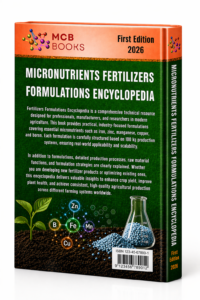 optimal growth, yield, and quality. Elements such as iron (Fe), zinc (Zn), manganese (Mn), copper (Cu), boron (B), and molybdenum (Mo) are needed in small quantities but play critical roles in plant metabolism, enzyme activation, and nutrient balance. The Industrial Micronutrient Fertilizer Formulas: Complete Manufacturing Guide provides a comprehensive resource for professionals seeking to produce high-quality fertilizers using proven industrial formulas and efficient manufacturing methods.
The foundation of micronutrient fertilizer production lies in the development of balanced and stable formulations. Industrial formulas are designed to ensure proper solubility, compatibility, and nutrient availability across different application methods, including foliar spraying, fertigation, and soil treatment. These fertilizers can be produced in various forms such as liquid solutions, water-soluble powders, suspension concentrates, and granules. Each formulation type requires specific processing conditions to maintain stability and performance during storage and application.
Liquid micronutrient fertilizers are widely used due to their rapid absorption and ease of application. However, producing stable liquid formulations requires careful control of factors such as water quality, pH levels, and the sequence of ingredient addition. High-purity raw materials and stabilizing agents are often used to prevent precipitation and ensure long-term stability. Industrial mixing systems are employed to achieve homogeneous solutions, while filtration processes help maintain product clarity and quality.
Powder and water-soluble micronutrient fertilizers are essential for large-scale agricultural operations. These formulations are designed for easy transportation, long shelf life, and rapid dissolution in water. Achieving a high-quality powder formulation involves controlling particle size distribution, minimizing moisture content, and ensuring uniform blending. Granular fertilizers are also produced using specialized techniques such as granulation and drying, allowing for controlled nutrient release and improved handling properties.
Chelation technology is a key element in modern micronutrient fertilizer manufacturing. Chelated micronutrients, such as EDTA, DTPA, and EDDHA complexes, enhance nutrient stability and availability, especially in alkaline soils where micronutrient fixation can limit plant uptake. By incorporating chelating agents into industrial formulas, manufacturers can produce fertilizers that deliver consistent and efficient nutrient absorption under a wide range of soil conditions.
The manufacturing process of micronutrient fertilizers involves several critical stages, including raw material selection, accurate weighing, controlled mixing, dissolution or granulation, and quality control. Each step must be carefully managed to ensure product consistency and compliance with industry standards. Quality control procedures such as pH measurement, solubility testing, and nutrient analysis are essential to verify product performance and reliability. Proper packaging and storage further ensure that the fertilizers maintain their effectiveness until they reach the end user.
A complete manufacturing guide not only provides industrial formulas but also offers practical insights into optimizing production efficiency. By following standardized methods, manufacturers can reduce production costs, minimize waste, and improve product quality. This is particularly important in a competitive global market where efficiency and reliability are key to success.
With the increasing demand for high-efficiency and sustainable fertilizers, micronutrient products represent a growing and profitable segment in agriculture. Farmers are increasingly aware of the importance of balanced nutrition, creating strong demand for advanced micronutrient solutions. By utilizing industrial formulas and modern manufacturing techniques, producers can develop innovative products that meet these needs and strengthen their market position.
In conclusion, the Industrial Micronutrient Fertilizer Formulas: Complete Manufacturing Guide is an essential resource for professionals in the fertilizer industry. It provides a complete framework for developing, producing, and optimizing micronutrient fertilizers, helping manufacturers achieve consistent quality and long-term success.