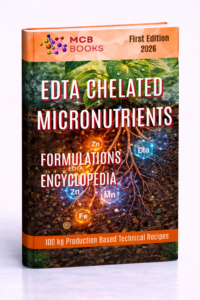
Professional Guide to Micronutrient Fertilizer Manufacturing and Formulations
 Micronutrient fertilizers are essential for maintaining plant health, improving crop yields, and ensuring sustainable agricultural production.
 Although required in small quantities, micronutrients such as iron (Fe), zinc (Zn), manganese (Mn), copper (Cu), boron (B), and molybdenum (Mo) play vital roles in plant metabolic processes, enzyme activation, and nutrient balance. A professional understanding of micronutrient fertilizer manufacturing and formulations is critical for producers aiming to deliver high-quality and effective agricultural inputs.
The manufacturing of micronutrient fertilizers begins with the selection of appropriate raw materials and the design of balanced formulations. These fertilizers are produced in various forms, including liquid solutions, water-soluble powders, and granules. Each formulation type is developed based on its intended application, whether for foliar spraying, soil treatment, or fertigation systems. A professional guide provides detailed formulation strategies that ensure optimal solubility, stability, and compatibility with other agricultural inputs.
One of the key aspects of micronutrient fertilizer formulations is achieving proper nutrient availability. In many soils, particularly alkaline or calcareous types, micronutrients can become unavailable to plants due to chemical reactions. To address this issue, chelation technology is widely used in modern formulations. Chelated micronutrients, such as those based on EDTA, DTPA, and EDDHA, protect nutrient ions and enhance their uptake by plants. A professional manufacturing guide explains how to incorporate these chelating agents effectively and optimize formulation parameters for maximum efficiency.
Liquid micronutrient fertilizers are popular due to their fast absorption and ease of application. However, producing stable liquid formulations requires careful control of pH, water quality, and ingredient compatibility. The manufacturing process involves precise mixing, dissolution, and stabilization steps to ensure that nutrients remain fully soluble and do not precipitate during storage. On the other hand, powder and granular formulations require strict control of particle size, moisture content, and blending uniformity. These factors are essential for achieving consistent product performance and easy application in the field.
The production process of micronutrient fertilizers typically includes weighing raw materials, controlled mixing, dissolution (for liquid formulations), drying or granulation (for solid forms), and quality control testing. Each step must be carefully monitored to maintain product consistency and meet industry standards. Quality control procedures, such as pH measurement, solubility testing, and nutrient analysis, are essential to ensure that the final product delivers the expected performance.
A professional guide also emphasizes scalability and efficiency in manufacturing. By using optimized production methods, manufacturers can reduce costs, minimize waste, and improve overall productivity. This is particularly important in a competitive global fertilizer market where efficiency and product quality are key success factors. Additionally, proper packaging and storage conditions play a significant role in maintaining the stability and shelf life of micronutrient fertilizers.
With the increasing demand for high-efficiency fertilizers, micronutrient products represent a growing and profitable segment in the agricultural industry. Farmers are becoming more aware of the importance of balanced plant nutrition, driving the need for advanced and reliable fertilizer solutions. By mastering manufacturing techniques and formulation strategies, producers can develop innovative products that meet these demands and gain a competitive advantage.
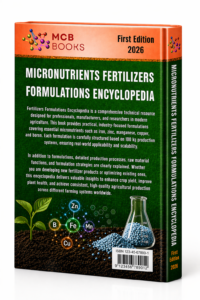
In conclusion, the Professional Guide to Micronutrient Fertilizer Manufacturing and Formulations provides a comprehensive and practical resource for industry professionals. It combines formulation expertise, manufacturing knowledge, and real-world application insights, enabling producers to create high-quality micronutrient fertilizers and succeed in a rapidly evolving agricultural landscape.