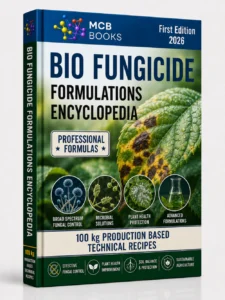
 The Bio Fungicide Formulations Encyclopedia provides practical technical guidance for developing biological fungicide products on a professional and commercial production scale. Using a 100 kg formulation basis makes it easier for manufacturers to understand ingredient ratios, production planning, raw material functions, and scale-up requirements for different types of biological disease control products.
Bio fungicides can be designed to help manage important plant diseases such as powdery mildew, downy mildew, Botrytis, root rot, damping-off, Fusarium, Pythium, Rhizoctonia, and other foliar or soil-borne diseases. Depending on the intended product, formulations may contain beneficial microorganisms, microbial metabolites, botanical extracts, naturally derived antifungal compounds, enzymes, or other biologically active materials.
A typical 100 kg bio fungicide formulation may include the main biological active ingredient together with suitable carriers, dispersing agents, wetting agents, stabilizers, suspending agents, emulsifiers, adhesion enhancers, anti-foaming agents, and other compatible functional additives. Each ingredient must be selected according to the characteristics of the active component and the intended application method.
For powdery mildew and downy mildew management, foliar formulations should provide good spreading and coverage on leaf surfaces. Wetting and adhesion properties are especially important because the active biological material must remain in effective contact with the plant surface. Formulation stability is also critical to prevent separation, sedimentation, or loss of biological activity during storage.
Products intended for Botrytis control require careful formulation because disease pressure can develop rapidly under humid conditions. Biological fungicide formulations may be designed to support preventive crop protection programs by helping biological active materials establish on plant surfaces before severe disease development occurs.
Root rot formulations are generally intended for soil, root-zone, seed, or transplant applications. Beneficial microorganisms used in these products may compete with harmful pathogens, colonize the rhizosphere, produce biologically active metabolites, or support a microbial environment less favorable to disease development.
During the manufacture of 100 kg batches, parameters such as water quality, pH, mixing speed, processing temperature, addition sequence, and hygiene must be carefully controlled. Excessive heat or aggressive mechanical processing may damage microbial active ingredients, while incompatible preservatives or surfactants may reduce viability and product performance.
Quality control should include evaluation of appearance, pH, density, viscosity, dispersibility, suspension stability, microbial viability where applicable, contamination levels, storage stability, and biological performance. Packaging should also protect the finished formulation from excessive heat, moisture, oxygen, and ultraviolet exposure when required.
The Bio Fungicide Formulations Encyclopedia offers manufacturers a structured reference for understanding 100 kg formulation concepts, raw material functions, manufacturing methods, stability requirements, and quality control. It supports the development of professional biological fungicides for modern agricultural disease management and integrated crop protection programs.