Best Plant Growth Regulators for Flowering Crops
(Complete Formulation Guide)
Getting consistent and strong flowering in crops is something every grower struggles with at some point. Weather changes, soil conditions, and plant stress can all affect how and when plants enter the flowering stage. This is exactly where plant growth regulators (PGRs) become essential. When used correctly, they don’t just increase flowering—they help make it more uniform, predictable, and efficient.
The most commonly used growth regulators for flowering crops are based on plant hormones like gibberellins, cytokinins, and auxins. Each of these works differently. Gibberellins are often used to stimulate flowering and elongation, especially in crops that need a push to enter the reproductive phase. Cytokinins help with cell division and can improve flower development and overall plant vitality. Auxins, on the other hand, are more about balance—they support proper growth patterns and can indirectly improve flower formation when used in the right ratios.
But the real difference between an average product and a high-performing one is not just the active ingredients. It’s how the formulation is built. A good formulation ensures that these hormones are stable, properly dissolved, and easily absorbed by the plant. This is why solvents, surfactants, and stabilizers are always part of a professional system. Without them, even the best active ingredients may not perform as expected.
From a practical point of view, growers usually prefer formulations that are easy to apply and show visible results within a short time. Liquid formulations are especially popular because they mix well with water and can be applied through spraying systems. The key is achieving the right balance—too low concentration may not give results, while too high can stress the plant.
For manufacturers or anyone planning to develop their own agricultural products, formulation is where most of the work happens. Small mistakes in pH balance, solubility, or ingredient compatibility can lead to unstable products or reduced effectiveness. That’s why many professionals prefer working with proven systems instead of building everything from scratch.
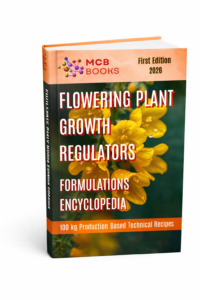
If the goal is to create reliable, market-ready products, using tested formulations makes a big difference. The FLOWERING PLANT GROWTH REGULATORS FORMULATIONS ENCYCLOPEDIA brings together real-world formulations, raw material systems, and production approaches that are already aligned with industry needs. It’s a practical shortcut for anyone who wants to move faster and avoid unnecessary trial and error.
In the end, successful flowering is not just about using growth regulators—it’s about using the right formulation in the right way. When everything is balanced correctly, the results are clear: better flowering, higher yield, and more consistent crop performance.