How to Formulate Flowering Plant Growth Regulators
(Industrial Guide with Real Formulas)
In modern agriculture, controlling and optimizing the flowering stage of plants is one of the most critical factors for achieving high yield and consistent crop quality. Flowering plant growth regulators (PGRs) are specially designed formulations that influence plant physiology to promote uniform flowering, improve fruit set, and increase overall productivity. These systems are widely used in greenhouse cultivation as well as open-field farming, making them essential tools for both small-scale growers and industrial agricultural operations.
Formulating an effective flowering plant growth regulator requires a deep understanding of both chemistry and plant biology. The core of these formulations typically includes plant hormones such as gibberellins, cytokinins, and auxins. These active ingredients directly influence plant growth and flowering behavior. However, the success of a formulation does not depend only on the active components. Supporting ingredients such as solvents, surfactants, chelating agents, and stabilizers play a crucial role in ensuring that the product is stable, effective, and easy to apply.
At the industrial level, the formulation process follows a carefully controlled sequence. First, the active ingredients are dissolved in a suitable solvent system under specific temperature conditions. This step ensures proper solubility and prevents degradation of sensitive compounds. After that, surfactants are added to improve spreading and absorption on plant surfaces. Chelating agents may be incorporated to enhance nutrient availability and maintain chemical stability. The formulation is then adjusted to the optimal pH range to maximize performance and shelf life. Finally, the mixture is filtered and packaged for commercial distribution.
The quality of formulation directly impacts product performance. Poorly designed formulations can lead to uneven flowering, reduced effectiveness, or even phytotoxic effects that harm the plants. In contrast, a well-balanced and professionally developed formulation ensures consistent flowering, better crop uniformity, and improved agricultural output. This is especially important for commercial growers who rely on predictable results.
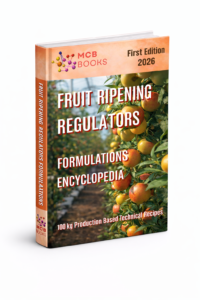
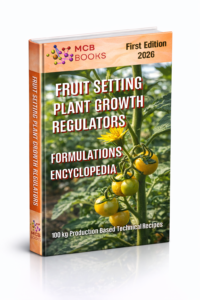
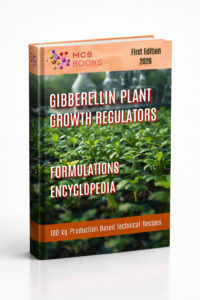
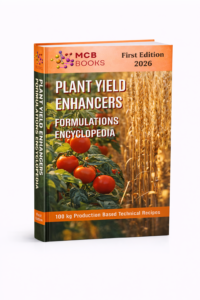
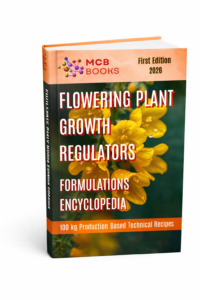
For entrepreneurs and manufacturers looking to enter the agrochemical market, developing these formulations from scratch can be time-consuming and costly. Instead of relying on trial-and-error methods, accessing proven industrial systems can significantly reduce development time and risk. The FLOWERING PLANT GROWTH REGULATORS FORMULATIONS ENCYCLOPEDIA provides ready-to-use, professionally structured formulations along with detailed production processes. These formulations are designed based on real industry experience, making them directly applicable in commercial production.
By using verified formulation systems, it becomes possible to produce high-performance flowering plant growth regulators that meet market expectations and deliver reliable results. Whether your goal is to improve crop yield or build a profitable agrochemical business, having access to the right formulation knowledge is the key to success.