Paclobutrazol Formulation and Manufacturing Process for Plant Growth Control
Paclobutrazol is one of the most widely used plant growth regulators in modern agriculture and greenhouse production systems. This powerful plant growth inhibitor is highly effective for controlling excessive vegetative growth, improving plant structure, enhancing flowering performance, and increasing crop quality. Due to its strong growth-regulating properties, paclobutrazol formulations are commonly used in fruit orchards, ornamental plants, vegetables, cereals, and greenhouse crops worldwide.
Paclobutrazol works by inhibiting gibberellin biosynthesis inside the plant. Gibberellins are plant hormones responsible for stem elongation and excessive vegetative growth. By reducing gibberellin activity, paclobutrazol helps plants develop shorter internodes, stronger stems, improved root systems, and more compact growth habits. This controlled growth structure allows better nutrient distribution and improved crop management efficiency.
In commercial agriculture, paclobutrazol is frequently used to reduce lodging risks in cereals, improve flowering uniformity in fruit trees, and enhance the commercial appearance of ornamental crops. Greenhouse producers also rely heavily on paclobutrazol technologies to optimize plant height and maximize production space efficiency. Compact plants improve air circulation, light penetration, and spray coverage while reducing disease pressure in dense cultivation systems.
The manufacturing process of paclobutrazol formulations requires professional formulation techniques and precise raw material balancing. Industrial formulations may be produced as soluble liquids, suspension concentrates, wettable powders, or emulsifiable concentrates depending on the intended application system. A commercial paclobutrazol formulation typically contains the active ingredient together with solvents, surfactants, stabilizers, dispersing agents, wetting agents, and preservation systems.
During production, the active ingredient is slowly incorporated into the carrier phase under controlled mixing conditions to ensure homogeneous distribution and long-term stability. Advanced homogenization systems are often used to improve particle distribution and formulation consistency. Quality control procedures such as viscosity measurement, pH adjustment, suspension stability testing, and storage resistance evaluation are essential for producing reliable commercial products.
As demand for controlled crop development continues to grow, paclobutrazol formulations remain one of the most important technologies in professional agriculture and greenhouse management. Manufacturers are increasingly searching for advanced formulation systems that offer strong biological performance, crop safety, and long shelf life.
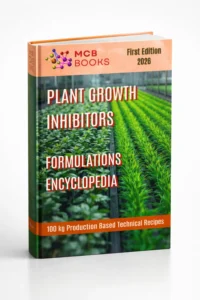
The Plant Growth Inhibitors Formulations Encyclopedia provides professional industrial formulation systems for paclobutrazol and other plant growth inhibitors. The encyclopedia includes commercial production methods, raw material details, CAS numbers, manufacturing techniques, and advanced agrochemical formulation technologies for modern agricultural production.