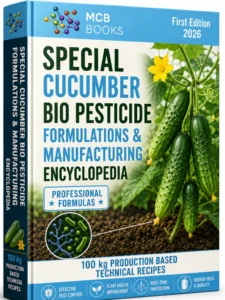
 Cucumber crops are vulnerable to a wide range of insect pests, mites, fungal diseases and soil-borne pathogens throughout the growing season. Aphids, whiteflies, thrips, spider mites, caterpillars, powdery mildew, downy mildew, Fusarium wilt, Pythium root rot and Rhizoctonia can significantly reduce plant vigor, fruit quality and commercial yield. For agricultural manufacturers, standardized 100 kg bio pesticide formulas provide a practical basis for developing biological crop protection products specifically designed for cucumber production.
Bio pesticide formulations for aphids and whiteflies can be developed using selected microbial active ingredients, botanical extracts, natural oils and biologically derived compounds. The formulation should provide good wetting and spreading properties because these pests frequently colonize the undersides of cucumber leaves. Proper distribution of the active components is therefore essential for effective coverage and performance.
Thrips and mites require specialized formulation strategies because they may remain hidden in flowers, young leaves and protected plant tissues. Bio insecticide and bio acaricide formulations can include suitable wetting agents, dispersing agents and other formulation auxiliaries that improve contact with the target pest. The correct balance between biological activity and physical stability is especially important in commercial products.
Fungal diseases are another major challenge in cucumber cultivation. Powdery mildew and downy mildew may spread rapidly in greenhouse and open-field production when environmental conditions are favorable. Bio fungicide formulations may use beneficial microorganisms, microbial metabolites, botanical substances and other naturally derived active materials. Products can be designed for preventive crop protection programs as well as integrated disease-management strategies.
Soil-borne pathogens such as Fusarium, Pythium and Rhizoctonia can affect cucumber roots, vascular tissues and overall plant development. Biological formulations intended for drip irrigation, soil treatment or root-zone application should remain stable in water and be compatible with irrigation equipment. Selected beneficial microorganisms can also support microbial competition around the roots and contribute to a healthier rhizosphere.
A typical 100 kg bio pesticide formulation may contain the biological active ingredient together with carriers, stabilizers, emulsifiers, wetting agents, dispersants, suspension aids, buffers, antifoaming agents and other formulation components. Raw material compatibility must be carefully evaluated because inappropriate ingredients can reduce microbial viability or destabilize botanical active substances.
Commercial production requires accurate weighing, controlled mixing order, suitable temperature conditions, pH adjustment and effective homogenization. Microbial formulations should generally be processed under mild conditions to preserve viable cells or spores. Oil-based and botanical products may require emulsification to produce a uniform and stable concentrate.
Quality control is essential for every 100 kg batch. Appearance, pH, density, viscosity, dispersion, sedimentation, storage stability and microbiological parameters should be monitored according to the formulation type. Consistent production conditions help ensure reliable performance from one batch to another.
The Special Cucumber Bio Pesticide Formulations & Manufacturing Encyclopedia provides practical formulation concepts, raw material information and manufacturing guidance for developing 100 kg bio insecticide, bio acaricide, bio fungicide and soil-applied biological products. It serves as a useful technical reference for manufacturers, formulators and agricultural professionals seeking specialized biological solutions for the major pest and disease problems encountered in commercial cucumber production.