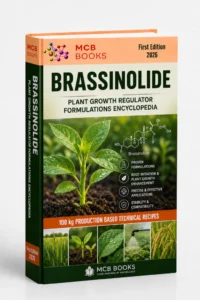
 Brassinolide is a highly active plant growth regulator belonging to the brassinosteroid group of naturally occurring plant hormones. It plays an important role in cell division, cell elongation, photosynthetic activity, root development, flowering, fruit formation and plant responses to environmental stress. Because brassinolide can influence several stages of plant growth at very low application concentrations, it has become an important subject in modern agricultural formulation technology and professional crop production.
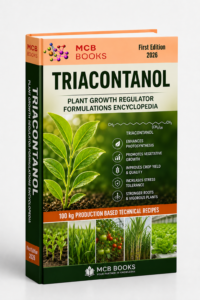
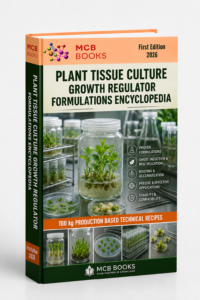
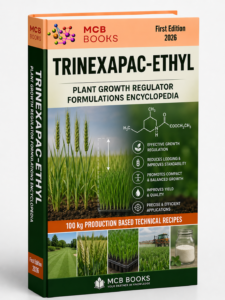
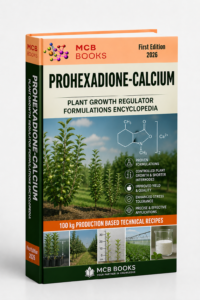
The BRASSINOLIDE PLANT GROWTH REGULATOR FORMULATIONS ENCYCLOPEDIA provides comprehensive technical information about brassinolide formulations, raw materials, production systems, application principles and commercial manufacturing methods. It is designed as a practical reference for manufacturers, agricultural formulators, researchers and professionals interested in developing stable and effective brassinolide-based products.
Commercial brassinolide formulations may be produced in different forms depending on the required concentration, application method and crop type. These can include soluble concentrates, emulsifiable systems, suspension formulations, water-compatible liquid products and other specialized formulations. Since brassinolide has limited direct solubility in water, appropriate solvents, co-solvents, surfactants, emulsifiers and stabilizing agents are often required to create a homogeneous and stable formulation.
Raw material selection is one of the most important stages of formulation development. In addition to brassinolide as the active ingredient, formulations may contain solvents, wetting agents, spreading agents, dispersants, stabilizers, buffering materials, preservatives and suitable carriers. Each ingredient must be compatible with the active substance and contribute to product stability, application performance and storage quality.
In agricultural applications, brassinolide is commonly associated with stronger vegetative development, improved root activity, increased photosynthetic efficiency and better plant adaptation to unfavorable growing conditions. It may also support flowering, fruit setting, fruit development and overall crop productivity when used correctly. Brassinolide-based products are therefore of interest in vegetable crops, fruit production, greenhouse cultivation, field crops and other high-value agricultural systems.
Another important application area is plant stress management. Brassinolide can influence physiological mechanisms involved in plant responses to drought, salinity, temperature fluctuations and other abiotic stresses. Properly designed formulations can help ensure uniform delivery of the active ingredient and improve consistency under practical field conditions.
Commercial manufacturing requires accurate weighing, controlled mixing, suitable temperature conditions and careful addition of ingredients. The solvent or carrier phase is normally prepared first, followed by incorporation of brassinolide and other functional components. Homogenization, pH adjustment and filtration may be performed depending on the formulation type.
Finished products should be evaluated for appearance, active ingredient concentration, pH, density, solubility or dispersibility, physical stability and storage performance. Accelerated and long-term stability testing is also important before commercial production and distribution.
The BRASSINOLIDE PLANT GROWTH REGULATOR FORMULATIONS ENCYCLOPEDIA: COMPLETE GUIDE TO FORMULATIONS, APPLICATIONS AND COMMERCIAL PRODUCTION brings formulation science, agricultural application knowledge and manufacturing principles together in a structured resource for the professional development of brassinolide plant growth regulator products.