Introduction
Dashboard polish products are commonly used in automotive detailing to maintain and improve the appearance of interior surfaces such as plastic, vinyl, and synthetic trims.
At first glance, these products may seem simple, but a well-prepared formulation does more than just add shine. It helps protect surfaces from UV exposure, reduces dust accumulation, and keeps materials from drying out over time.
For anyone working on automotive cleaning or detailing products, understanding how these formulations are built can make a noticeable difference in product quality.
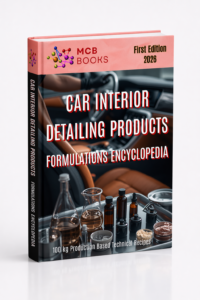
Covers dashboard polish, interior cleaners, and surface conditioning systems used in real production.
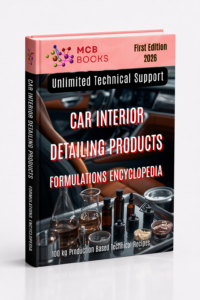
👉 CAR INTERIOR DETAILING PRODUCTS FORMULATIONS ENCYCLOPEDIA
Key Ingredients in Dashboard Polish
Most dashboard polish formulations are based on a combination of silicone systems, emulsifiers, and surface-active ingredients.
Silicone components are used to create a smooth finish and enhance appearance. Emulsifiers help distribute these components evenly in water-based systems, while surfactants assist with cleaning and application.
In addition, UV stabilizers are often included to reduce fading, especially in vehicles exposed to sunlight for long periods.
The exact balance of these ingredients determines whether the final product provides a natural matte finish or a more noticeable shine.
Types of Dashboard Polish Formulations
Different formulations are developed depending on usage and target market.
Water-based products are generally preferred for interior use because they are easier to apply and leave less residue. Solvent-based versions may offer stronger cleaning but require more careful handling.
Some formulations focus on anti-dust properties, while others aim for deeper conditioning of plastic and vinyl surfaces.
Choosing the right type depends on the intended performance and user expectations.
How It Fits into a Larger System
Although dashboard polish is used inside the vehicle, it is rarely developed as a completely separate product.
In practice, it is part of a wider detailing range that includes exterior cleaning products, maintenance solutions, and surface protection systems.
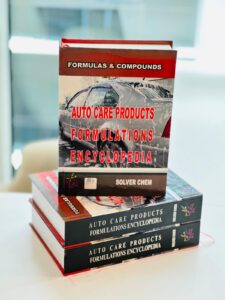
👉 Car Care Products Formulation System (Complete Automotive Chemical Production Guide)
Looking at these products together often helps create a more consistent product line rather than developing each item independently.
Connection with Surface Protection Products
Modern dashboard polish formulations are designed not only for appearance but also for protection.
They can help reduce surface aging, minimize static buildup, and improve durability over time. In this sense, they share some similarities with surface protection products used on exterior parts of the vehicle.
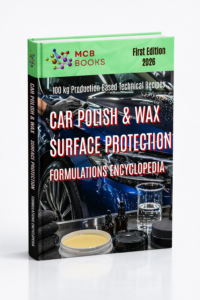
👉 CAR POLISH & WAX SURFACE PROTECTION FORMULATIONS ENCYCLOPEDIA
Understanding this connection can be useful when expanding a product range beyond interior applications.
Basic Production Process
The production process usually begins with preparing the base phase, which may be water or a solvent system depending on the formulation type.
Emulsifiers and surfactants are added under controlled mixing, followed by silicone components. Additives such as preservatives and fragrance are incorporated at later stages.
The mixture is then homogenized until a stable and uniform product is obtained.
Consistency in mixing and raw material quality plays an important role in the final result.
Expanding into Other Automotive Formulations
For manufacturers working in this field, dashboard polish is often just one part of a broader product portfolio.
As production grows, it is common to expand into additional categories such as cleaning products, maintenance solutions, and even more specialized automotive chemicals.
👉 FUEL ADDITIVES FORMULATIONS ENCYCLOPEDIA
This step allows for a more complete and scalable product line.
SUMMARY
Dashboard polish formulations combine cleaning, conditioning, and protective properties in a single product designed for interior surfaces.
While the production process is relatively straightforward, the balance of ingredients plays a key role in determining performance and durability.
In practice, these products are often developed alongside other automotive cleaning and protection systems, allowing for a more consistent and well-structured product range.
Related Books
If you are also interested in how automotive cleaning and detailing products are developed together:
👉 CAR INTERIOR DETAILING PRODUCTS FORMULATIONS ENCYCLOPEDIA
This can provide a broader view of how different formulations fit into a complete automotive product system.