How to Make Flower Boosting Plant Hormones
(Industrial Formulation Guide)
 In commercial agriculture, improving flowering performance is one of the most effective ways to increase yield and crop quality. Flower boosting plant hormones are widely used to support plants during the transition from vegetative growth to the flowering stage. When formulated correctly, these systems help achieve more uniform blooms, stronger flower development, and better overall productivity.
At the industrial level, producing these formulations requires more than simply combining a few ingredients. The process begins with selecting the right plant hormones. The most commonly used actives are gibberellins, cytokinins, and in some cases auxins. Gibberellins are often used to trigger flowering and stimulate plant growth, especially in crops that show delayed blooming. Cytokinins support cell division and improve flower structure, while auxins help regulate plant balance and enhance the overall performance of the formulation when used in controlled amounts.
The next step is choosing a suitable solvent system. Many plant hormones are not easily soluble in water, so they must first be dissolved in alcohol-based or glycol-based solvents. This ensures that the active ingredients are evenly distributed and remain stable throughout the product’s shelf life. Proper dissolution is one of the most critical steps in the entire process.
After dissolving the active ingredients, surfactants are added to the formulation. These components improve spreading and absorption on plant surfaces, allowing the hormones to penetrate leaf tissues more effectively. Without a good surfactant system, even high-quality active ingredients may not deliver consistent results in real field conditions.
Stabilizers are then incorporated to protect the formulation from degradation caused by light, temperature, or oxidation. In some cases, chelating agents are also included to improve compatibility, especially when the product is diluted with water of varying hardness levels. These supporting ingredients play a key role in ensuring long-term product performance.
pH adjustment is another essential stage in industrial formulation. Plant hormones are sensitive to pH changes, so maintaining an optimal pH range helps preserve both stability and effectiveness. Once the formulation reaches the desired pH, it is filtered to remove any undissolved particles and then transferred into packaging suitable for storage and distribution.
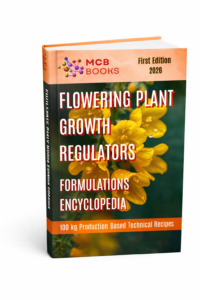
For manufacturers, the biggest challenge is achieving a balanced and stable formulation that performs consistently under different conditions. Developing such systems from scratch can take significant time and experimentation. Instead of relying on trial and error, many professionals prefer using proven formulations. The FLOWERING PLANT GROWTH REGULATORS FORMULATIONS ENCYCLOPEDIA offers industrial-ready systems, optimized ingredient combinations, and practical production insights that simplify the process.
In the end, making effective flower boosting plant hormones is not just about selecting the right actives—it’s about creating a stable, efficient formulation that delivers results in real agricultural environments.