Flowering Hormone Formulations:
Ingredients, Ratios & Manufacturing Process
 In modern crop production, flowering is one of the most sensitive and yield-defining stages. Even small inconsistencies in this phase can lead to uneven fruit set and lower productivity. That’s why flowering hormone formulations are widely used—they help regulate plant metabolism and support a more controlled, uniform flowering process.
A well-designed flowering formulation starts with the right selection of plant hormones. The most commonly used actives are gibberellins, cytokinins, and sometimes auxins. Gibberellins are typically chosen to stimulate flowering and elongation, especially in crops that struggle to initiate blooms. Cytokinins support cell division and improve flower quality, while auxins help maintain balance in plant growth and enhance overall system performance when used in low, controlled amounts.
However, ingredients alone are not enough. The ratio between these components is what determines the final effectiveness of the formulation. Too much gibberellin can lead to excessive vegetative growth instead of flowering, while insufficient cytokinin levels may limit flower development. A balanced ratio ensures that the plant receives the right signals at the right time. This is why professional formulations are carefully optimized rather than randomly mixed.
Beyond the active ingredients, supporting components play a critical role. Solvents are used to dissolve hormone compounds that are not water-soluble. Surfactants improve spreading and absorption on plant surfaces, ensuring that the active ingredients reach their target effectively. Stabilizers protect sensitive molecules from degradation, and in some systems, chelating agents are added to improve compatibility and performance under different water conditions.
The manufacturing process follows a structured sequence. First, the active ingredients are dissolved in a suitable solvent system under controlled temperature. This step ensures complete dispersion and prevents instability. After that, surfactants are introduced gradually while mixing continues to maintain uniformity. Stabilizers and other supporting ingredients are then added, followed by careful pH adjustment. Maintaining the correct pH range is essential because plant hormones are often sensitive to acidic or alkaline conditions. Finally, the formulation is filtered and packaged, ready for commercial use.
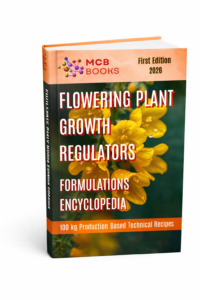
For producers, the biggest challenge is achieving consistency. Small deviations in ratios, mixing conditions, or raw material quality can significantly affect the final product. Instead of relying on trial-and-error development, many professionals prefer working with proven systems. The FLOWERING PLANT GROWTH REGULATORS FORMULATIONS ENCYCLOPEDIA provides ready-to-use formulations, optimized ingredient ratios, and practical production guidance based on real industry experience.
In the end, successful flowering hormone formulations depend on three key factors: the right ingredients, the correct ratios, and a controlled manufacturing process. When these elements are aligned, the result is a stable, effective product that delivers consistent flowering and improved crop performance.