Introduction
Tar, asphalt, and bitumen residues are among the most stubborn contaminants found on industrial surfaces and vehicle exteriors. Standard detergents often fail to remove these hydrophobic deposits effectively, which is why specialized tar remover formulations are essential in both automotive detailing and industrial cleaning applications.
A well-designed tar remover works by dissolving heavy hydrocarbon-based residues without damaging painted or coated surfaces. This requires a carefully balanced combination of solvents, emulsifiers, and stabilizers to ensure both cleaning performance and surface safety.
Below, you will find a complete overview of how tar remover products are formulated, how they work, and how they are produced at an industrial scale.
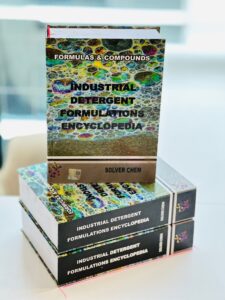
If you are looking for ready-to-use, professionally developed tar remover formulations, this encyclopedia includes detailed formulas created by an experienced chemical engineer with over 40 years of industry expertise.
What Is a Tar Remover?
A tar remover is a solvent-based cleaning product specifically designed to dissolve:
- Road tar
- Asphalt residues
- Bitumen deposits
- Adhesive hydrocarbon contaminants
Unlike water-based cleaners, tar removers rely on organic solvents that can penetrate and break down non-polar substances.
These products are widely used in:
- Automotive detailing
- Industrial maintenance
- Heavy equipment cleaning
- Surface preparation processes
How Tar Remover Works
The cleaning mechanism of tar removers is based on a simple chemical principle:
👉 “Like dissolves like”
Since tar and bitumen are non-polar substances, they require non-polar or slightly polar solvents to dissolve effectively.
A typical tar remover works by:
- Penetrating the tar layer
- Softening the hydrocarbon structure
- Breaking adhesion between the contaminant and the surface
- Allowing easy removal by wiping or rinsing
This is why conventional detergents fail — they cannot interact effectively with these types of contaminants.
Key Ingredients in Tar Remover Formulations
A high-performance tar remover formulation generally includes:
1. Solvents
The main active components responsible for dissolving tar:
- Aliphatic hydrocarbons (e.g., mineral spirits)
- Aromatic solvents (in stronger formulations)
- Oxygenated solvents for improved efficiency
2. Emulsifiers
These help the dissolved tar mix with water for easier rinsing:
- Nonionic surfactants (e.g., alcohol ethoxylates)
3. Corrosion Inhibitors
Used to protect metal surfaces during cleaning.
4. Fragrance (Optional)
Improves user experience, especially in consumer products.
Basic Tar Remover Formulation Approach
While exact formulations vary depending on application, the general structure is:
- Solvent base (primary cleaning phase)
- Emulsifier system (for rinsability)
- Additives (stability, safety, performance)
The key challenge in formulation is:
👉 Balancing cleaning strength vs. surface safety
Too strong → damages paint
Too weak → ineffective cleaning
Industrial Production Process
Tar remover production is relatively straightforward but requires controlled conditions to ensure stability and safety.
The general process includes:
- Charging the mixing tank with the solvent base
- Slowly adding emulsifiers under agitation
- Incorporating additives such as corrosion inhibitors
- Mixing until a homogeneous solution is obtained
- Filtering (if necessary)
- Filling into appropriate containers
Proper ventilation and explosion-proof equipment are essential due to the use of flammable solvents.
Applications of Tar Remover Products
Tar removers are used in a wide range of industries:
- Car detailing and vehicle maintenance
- Truck and heavy machinery cleaning
- Industrial surface degreasing
- Pre-paint surface preparation
They are especially valuable in environments where road contamination is frequent and heavy.
Safety and Usage Considerations
Due to their solvent content, tar removers must be used carefully:
- Apply on cool surfaces
- Avoid prolonged contact with sensitive coatings
- Use proper protective equipment
- Ensure good ventilation
Correct usage ensures maximum cleaning efficiency without surface damage.
Why Professional Formulations Matter
Many low-quality tar remover products fail due to:
- Poor solvent selection
- Incorrect emulsifier balance
- Lack of stability
Professional formulations are optimized for:
- High efficiency
- Surface safety
- Storage stability
- Cost-performance balance
Get Professional Tar Remover Formulations
If you want to produce high-performance industrial tar remover products, using proven formulations is critical.
👉 The Industrial Detergent Formulations Encyclopedia provides:
- Tested and optimized tar remover formulas
- Industrial-scale production methods
- Raw material selection guidance
- Performance-focused formulations
These formulas are developed by a chemical engineer with over 40 years of real industry experience — not AI-generated content.
Related Articles
-
Tar Remover Formula | Ingredients, Composition and Industrial Process
-
Solvent Based Tar Remover | Formulation, Ingredients and Performance
-
Tar Remover vs Degreaser | Differences, Applications and Formulation Guide
-
How to Clean Tar from Surfaces | Practical Methods and Tar Remover Guide