Introduction
Tar and asphalt residues are among the most difficult contaminants to remove from surfaces. These deposits strongly adhere to vehicle paint, metal, and industrial equipment, making standard cleaning products ineffective. This is why tar remover formulations rely on specialized solvent systems designed to dissolve heavy hydrocarbon residues efficiently.
Understanding the correct combination of ingredients is essential for producing a high-performance tar remover. A well-balanced formulation ensures strong cleaning power while maintaining surface safety and product stability.
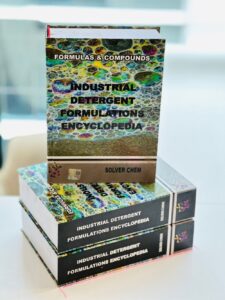
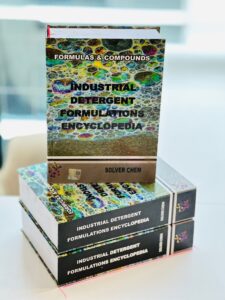
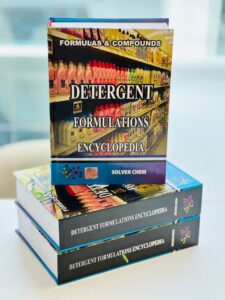
If you are looking for proven tar remover formulations used in real industrial production, this encyclopedia includes detailed recipes developed by a chemical engineer with over 40 years of experience. It provides a practical foundation for producing high-performance cleaning products.
What Makes a Tar Remover Effective?
The effectiveness of a tar remover depends on its ability to interact with non-polar substances such as bitumen and asphalt.
Since these contaminants are hydrophobic, they cannot be removed with water-based cleaners. Instead, tar removers use solvent systems that can:
- Penetrate the tar layer
- Break down hydrocarbon structures
- Reduce adhesion to surfaces
- Allow easy removal by wiping or rinsing
This is the same principle explained in detail in the main production guide:
👉 How to Make Tar Remover | Formula, Ingredients and Production Process
Key Ingredients in Tar Remover Formulas
A typical tar remover formulation consists of several essential components, each serving a specific function.
Solvent Base
The solvent phase is the most critical part of the formulation. It provides the actual cleaning power.
Common options include:
- Aliphatic hydrocarbon solvents
- Aromatic solvents
- Oxygenated solvents
The choice of solvent determines both the strength and safety of the product.
Emulsifiers
Emulsifiers allow the dissolved tar to mix with water, making the product easier to rinse off.
- Nonionic surfactants are commonly used
- They improve cleaning uniformity
- They reduce residue on surfaces
Corrosion Inhibitors
These additives protect metal surfaces during cleaning, especially in industrial applications.
Additives and Enhancers
Depending on the product type:
- Fragrance
- Stabilizers
- Wetting agents
Formulation Balance: Performance vs Safety
One of the biggest challenges in tar remover formulation is achieving the right balance.
A strong solvent system may remove tar quickly but can also damage surfaces. On the other hand, mild systems may be safer but less effective.
This balance is what separates basic formulations from professional industrial products.
Industrial Production Approach
Producing tar remover products on an industrial scale requires controlled mixing and proper raw material selection.
The general production process includes:
- Solvent charging
- Emulsifier addition
- Additive incorporation
- Homogeneous mixing
- Packaging
You can explore the complete industrial production breakdown here:
👉 How to Make Tar Remover | Formula, Ingredients and Production Process
Common Mistakes in Tar Remover Formulation
Many low-quality products fail due to:
- Incorrect solvent selection
- Poor emulsifier compatibility
- Lack of stability
- Over-aggressive compositions
These issues result in ineffective or unsafe products.
Why Professional Formulas Matter
Developing an effective tar remover is not just about mixing solvents. It requires understanding:
- Chemical compatibility
- Surface interaction
- Stability behavior
Professional formulations ensure consistent performance and safe application.
Get Professional Tar Remover Formulations
If you want to produce high-quality tar remover products, using tested formulations is critical.
The Industrial Detergent Formulations Encyclopedia includes:
- Industrial tar remover formulas
- Raw material selection strategies
- Production techniques
- Performance-optimized compositions
These formulas are based on real industry experience and designed for practical use.
Related Articles
-
How to Make Tar Remover | Formula, Ingredients and Production Process
-
Solvent Based Tar Remover | Formulation, Ingredients and Performance
-
Tar Remover vs Degreaser | Differences, Applications and Formulation Guide
-
How to Clean Tar from Surfaces | Practical Methods and Tar Remover Guide