 INTRODUCTION
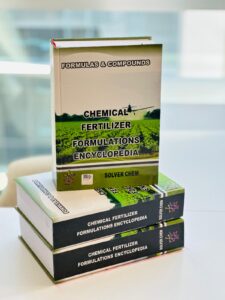
Chemical fertilizers are industrially produced nutrient materials formulated to supply essential plant nutrients in precise and readily available forms. They play a vital role in modern agriculture by improving crop yield, quality, and nutrient efficiency. Understanding how to prepare chemical fertilizers and their types is fundamental for fertilizer manufacturing, formulation design, and effective agricultural use.
WHAT ARE CHEMICAL FERTILIZERS
Chemical fertilizers are inorganic or synthetically manufactured fertilizers containing defined amounts of nutrients.
-
Supply macronutrients, secondary nutrients, and micronutrients
-
Rapidly available to plants
-
Produced through chemical reactions or controlled blending
-
Available in solid and liquid forms
They differ from organic fertilizers in origin and nutrient release behavior.
MAIN TYPES OF CHEMICAL FERTILIZERS
NITROGEN FERTILIZERS
-
Urea
-
Ammonium nitrate
-
Ammonium sulfate
-
Calcium ammonium nitrate
-
Liquid nitrogen fertilizers (UAN)
PHOSPHORUS FERTILIZERS
-
Single superphosphate (SSP)
-
Triple superphosphate (TSP)
-
Mono ammonium phosphate (MAP)
-
Diammonium phosphate (DAP)
POTASSIUM FERTILIZERS
-
Potassium chloride
-
Potassium sulfate
-
Potassium nitrate
-
Potassium phosphate
SECONDARY NUTRIENT FERTILIZERS
-
Calcium fertilizers
-
Magnesium fertilizers
-
Sulphur fertilizers
MICRONUTRIENT FERTILIZERS
-
Iron, zinc, manganese, copper
-
Boron, molybdenum
-
Chelated micronutrient fertilizers
HOW TO PREPARE CHEMICAL FERTILIZERS
1. RAW MATERIAL SELECTION
The preparation process starts with choosing suitable raw materials.
-
Nitrogen sources (ammonia, urea, nitrates)
-
Phosphate sources (phosphate rock, phosphoric acid)
-
Potassium salts
-
Acids and alkalis for reactions
-
Micronutrient salts and chelates
Raw material purity determines fertilizer quality.
2. CHEMICAL REACTION PROCESS
Used for producing most chemical fertilizers.
-
Neutralization of acids with ammonia or alkalis
-
Synthesis reactions (urea, ammonium phosphates)
-
Controlled temperature and pressure
This method produces chemically bonded nutrients.
3. BLENDING PROCESS
A physical preparation method.
-
Mixing different fertilizer materials
-
Used for bulk blended fertilizers
-
No chemical reaction involved
Blending requires uniform particle size to avoid segregation.
4. GRANULATION PROCESS
Transforms materials into solid granules.
-
Drum or pan granulation
-
Addition of binders
-
Drying and cooling
Granulation improves handling and uniform application.
5. PRILLING PROCESS
Used mainly for nitrogen fertilizers.
-
Molten fertilizer sprayed in prilling towers
-
Formation of spherical prills
-
Cooling and screening
6. LIQUID FERTILIZER PREPARATION
Used for fertigation and foliar fertilizers.
-
Dissolution of soluble fertilizers in water
-
Neutralization reactions
-
pH adjustment and stabilization
-
Filtration and quality control
QUALITY CONTROL IN CHEMICAL FERTILIZER PREPARATION
-
Nutrient content analysis
-
Moisture and solubility testing
-
Particle size control
-
Stability and compatibility checks
Quality control ensures consistent fertilizer performance.
ADVANTAGES OF CHEMICAL FERTILIZERS
-
Precise nutrient composition
-
Rapid plant availability
-
High efficiency and yield response
-
Compatibility with modern farming systems
LIMITATIONS AND PRECAUTIONS
-
Risk of nutrient losses if misused
-
Environmental impact if over-applied
-
Requires proper application timing and rates
Balanced use is essential for sustainability.
SUMMARY
How to prepare chemical fertilizers | types includes selecting suitable raw materials, applying chemical reactions or blending techniques, and finishing products through granulation, prilling, or liquid formulation. Chemical fertilizers provide efficient, precise plant nutrition when properly prepared and used, making them indispensable in modern agricultural production.