Zinc deficiency in apple trees can affect both new growth and fruit development, especially when the tree is unable to take up enough zinc from the soil. Zinc is needed for normal enzyme activity, growth regulation, leaf development, flowering and fruit set, so a deficiency can quickly show up in the younger parts of the tree.
One of the most noticeable signs is rosette growth, where leaves become small and narrow and the spaces between them are shortened. Weak shoot growth, pale leaves and poor fruit development may also appear when the problem continues.
Soil conditions also matter. High pH, calcareous soils, excess phosphorus and limited zinc availability can all reduce uptake, even when zinc is present in the soil. For this reason, identifying the deficiency correctly is important before choosing a zinc fertilizer or treatment method.
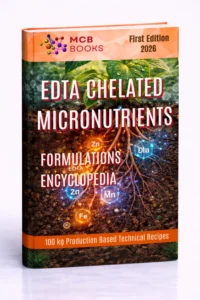
For more detailed zinc and micronutrient fertilizer formulations,
the
EDTA CHELATED MICRONUTRIENTS FORMULATIONS ENCYCLOPEDIA
provides practical formulation examples, raw material information and production guidance for zinc and other chelated micronutrient products.
Common Signs of Zinc Deficiency in Apple Trees
Zinc deficiency usually appears first in the younger parts of the tree. New leaves may stay small, narrow or pale, and shoot growth can become weak.
One of the best-known symptoms is rosetting. In this case, the distance between leaves becomes shorter and the leaves appear crowded together near the tip of the shoot. Fruit size and general tree development may also be affected when the deficiency continues.
Because similar symptoms can sometimes be caused by other nutritional or soil problems, zinc deficiency should be evaluated together with soil and plant conditions.
Why Zinc Becomes Unavailable
A tree may show zinc deficiency even when some zinc is present in the soil. High soil pH, calcareous conditions and nutrient imbalances can reduce zinc availability to the roots.
Excess phosphorus may also interfere with zinc uptake in some situations. For this reason, simply adding more fertilizer is not always the best approach. The type of zinc source and the way it is applied can make a difference.
Zinc Fertilizers for Apple Trees
Zinc can be supplied through different fertilizer systems, including conventional mineral sources and chelated micronutrient products.
Chelated zinc formulations are often preferred where nutrient availability is a concern because the chelating system helps keep the micronutrient in a more usable form under suitable application conditions.
For commercial fertilizer production, the formulation should consider the zinc source, chelating agent, concentration, stability and intended application method.
Chelated Micronutrient Formulations
If you are working with zinc or other micronutrient fertilizers,
the
EDTA CHELATED MICRONUTRIENTS FORMULATIONS ENCYCLOPEDIA
provides practical formulation examples, raw material information and production guidance for chelated micronutrient products.
It is useful not only for zinc-based products, but also for readers working with broader micronutrient fertilizer systems.
Explore More Chemical Fertilizer Formulations
If you are interested in fertilizer production beyond zinc, you can also explore our
Chemical Fertilizer Manufacturing Books category.
There you can find formulation books covering different nutrient systems, micronutrients and commercial fertilizer production methods.
Chemical Fertilizer Manufacturing Books:
https://makingchembooks.com/product-category/chemical-fertilizers-books/
Summary
Zinc deficiency in apple trees can affect leaf size, shoot growth, flowering and fruit development, with rosette growth being one of the clearest warning signs.
The problem is not always caused by a complete lack of zinc in the soil. Soil pH, nutrient balance and zinc availability can all influence how much zinc the tree can actually use.
For readers looking for practical formulation and production information, the EDTA CHELATED MICRONUTRIENTS FORMULATIONS ENCYCLOPEDIA offers a useful next step for zinc and other chelated micronutrient products.
You can also browse the Chemical Fertilizer Manufacturing Books category to explore more fertilizer formulation and manufacturing resources.