Soil pH is a characteristic that describes
the relative acidity or alkalinity of the soil.
Technically, pH is defined as the negative (-) log or base 10 value of the concentration of hydrogen ions (H+). Pure water will be close to a neutral pH, that is 10 to the minus 7 concentration of H+ ions (10-7 [H+]). This concentration is expressed as 7. Any value above 7 means the H+ ion concentration is lower than at a neutral pH and the solution is alkaline and there are more hydroxyl (OH-) ions present than H+ ions. Any value below 7 means the H+ ion concentration is greater than at neutral pH and the solution is acidic. Soils are considered acidic below a pH of 5, and very acidic below a pH of 4. Conversely, soils are considered alkaline above a pH of 7.5 and very alkaline above a pH of 8. Typically, soil pH values are measured when 10 g of air-dried soil is mixed with 20 ml of double-distilled water or 20 ml of 0.01 M CaCl2 solution, and the pH is measured using an appropriate electrode connected to a pH meter. This soil analysis is a regular part of most if not all soil test protocols.
The availability of some
plant nutrients is greatly affected by soil pH.
The “ideal” soil pH is close to neutral, and neutral soils are considered to fall within a range from a slightly acidic pH of 6.5 to slightly alkaline pH of 7.5. It has been determined that most plant nutrients are optimally available to plants within this 6.5 to 7.5 pH range, plus this range of pH is generally very compatible to plant root growth.
Nitrogen (N), Potassium (K), and Sulfer (S) are major plant nutrients that appear to be less affected directly by soil pH than many others, but still are to some extent. Phosphorus (P), however, is directly affected. At alkaline pH values, greater than pH 7.5 for example, phosphate ions tend to react quickly with calcium (Ca) and magnesium (Mg) to form less soluble compounds. At acidic pH values, phosphate ions react with aluminum (Al) and iron (Fe) to again form less soluble compounds. Most of the other nutrients (micronutrients especially) tend to be less available when soil pH is above 7.5, and in fact are optimally available at a slightly acidic pH, e.g. 6.5 to 6.8. The exception is molybdenum (Mo), which appears to be less available under acidic pH and more available at moderately alkaline pH values.
In some situations, materials are added
to the soil to adjust the pH.
On a field scale, this is most commonly done for acidic soils to raise the pH from 4.5 to 5.5 up to 6.5 or approaching neutrality. This is done by applying and incorporating a liming material, often finely ground calcitic limestone or dolomitic limestone, that is spread using specialized lime spreaders, or spin-spreaders adapted with vibrating systems to prevent bridging of the material in the hoppers of the spreaders. It is possible to lower the pH of a soil using a liquid acid solution, or finely ground elemental S that oxidizes to sulfuric acid through the action of soil inhabiting S-oxidizing bacteria. However, this is rarely done on a field-scale basis because of the high cost. It is more commonly done in horticulture production applications where individual plant containers or limited areas (e.g. <10 to 20 acres) are managed to lower the pH for acidic soil adapted plants such as some flowers, trees, and/or small fruits (i.e. blueberry and cranberry). It is important to note that most on-going crop production will gradually lower the soil pH as the H+ ions are released and converted over to nitrate by soil microbes. This is especially true where N fertilizers such as anhydrous ammonia, ammonium sulfate, and urea are applied.
Whether or not you try to adjust pH,
it is important to understand other methods
to increase the availability and use of added nutrients.
This can be done in a number of ways for the nutrients mentioned above that are adversely affected by extremes in soil pH, acidic or alkaline. For example, P-containing fertilizer can be applied in or close to the seed-row at planting to facilitate early season uptake of phosphate ions by crop roots before allowing it to react with soil cations that dominate under acidic or alkaline soil pH conditions. Under alkaline soil pH values, the phosphate fertilizer can be applied in bands with fertilizer which generates an ionized form of ammonia (NH4). That will allow slight acidification of the soil adjacent to the fertilizer band. Another method is to manufacture compound nutrient fertilizer granules that contain the N, P, and even elemental S-containing fertilizers, for application to alkaline soils. The soil adjacent to the granule will also be acidified slightly and allow enhanced P uptake when the crop roots intercept the granules. Yet another example is the foliar application of soluble Fe fertilizer compounds to Fe-deficient crops grown in high pH soils where the fertilizer react so fast with soil that the nutrient is tied up and unavailable to plants. This is why soil applied Fe fertilizers often do not successfully correct Fe deficiencies. By avoiding the soil and applying the Fe to the leaves, the small amount of plant-required Fe is successfully introduced into the crop.
Next time you have soil samples taken on your fields,
take time to note what the pH values are in your
results. It is useful to compare these values to previous soil test pH values and determine if there is a trend of soil pH change. By monitoring the pH values regularly (every 2 to 3 years) in a field, you may consider action to raise the pH of the soil from acidic to near neutral pH values by liming. Increased nutrient availability and improved crop growth can be achieved when adding liming material to an excessively acidic soil. This can be especially important for crops requiring neutral pH, such as legume forages or pulses, as the Rhizobia species bacteria do not nodulate and fix N effectively under pH values less than 5.5
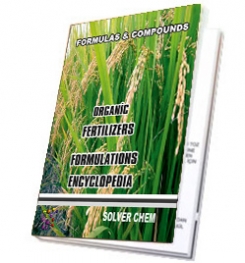
ORGANİC FERTILIZERS AND PRODUCTIONS
any liquid and solid organic fertilizer,
ORGANIC
FERTILIZERS
FORMULATIONS
ENCYCLOPEDİA
is enough.
This encyclopedia has many formulations about organic soil conditioner,humic acid productions,compositions,fulvic acid manufacturing,organic fertilizers,animal manure,amino acid organic fertilizers, organomineral powder fertilizers,organomineral liquid fertilizers productions,liquid root growth fertilizers formulas,granular root growth fertilizers,seaweed organic fertilizers,wermicompost fertilizers formulations,gel organic fertilizers,organomineral gel fertilizers manufacturing and any organic fertilizers etc.
All organic fertilizers in the encyclopedia are producible easily.You need no help and no technıcal support. The encyclopedia is enough to produce organic fertilizers itself.
ORGANIC
FERTILIZERS
FORMULATIONS
ENCYCLOPEDIA
is written clear and understandable.
RELATED TAGS: What is organic fertilizer,preparation of organic soil conditioner, liquid organic fertilizer manufacturing,animal manure manufacturing, manufacturing proces of animal manure,chicken manure,efficiency of humic acid in soil,effect of humic acid in plants, advantages of humic acid in agriculture, types of animal manure,seaweed fertilizer manufacturing process,production of liquid seaweed fertilizers, what is organic compost, preparation of organic compost,how to use organic compost,making organic compost, using of seaweed fertilizer,properties of seaweed organic fertilizers how to make liquid organic fertilizers, making organic compost,types of organic compost,manufacturing process of organic compost, how to make organic compost fertilizers, production of organic fertilizers,manufacturing process solid humic acid, formulation of humic acid,value of humic acid,manufacturing process of fulvic acid,how to produce humic acid,what is leoardite,where to use leonardite,types of leonardite,properties of leonardite,analyzes of leonardite,specification of leonardite, values of leonardite, what is leonardite humate,what is potassium humate, liquid humic acid preparation,powder humic acid production, granular soil conditioner manufacturing process, powder soil conditioner making,formulation of organic soil conditioner, making powder humic acid,humic acid production, composition of organic fertilizers,how to use organic fertilizers,why to use organic fertilizer,types of organic fertilizer,benefits of organic fertilizers,wermicompost fertilizers making, powder organic fertilizers,how to use organic fertilizers, making wermicompost fertilizer, formulation of seaweed fertilizers, amino acid fertilizer production,granular organic fertilizer,amino acid organic fertilizer manufacturing, properties of organic fertilizers, analyzes of organic fertilizer, specification of organic fertilizers, where to use organic fertilizers, what is soil amendments, humic acid making, how to make powder humic acid, manufacturing process of fulvic acid, herbal fulvic acid making, liquid humic acid process, formulation of humic acid,organic fertilizers for plants, organic fertilizers in agriculture, how to produce organic fertilizers, animal manure manufacturing process, herbal fertilizers, what is organic fertilizer compost, what is organic agriculture, how to make organic agriculture, advantages of organic fertilizers, effects of organic fertilizer, results of organic fertilizers, indications of organic fertilizers, symptoms of organic fertilizers, preparation of organic fertilizers, calculation of organic fertilizers, compounds of organic fertilizers,composition of liquid organic fertilizers, fertilization of organic fertilizers,why to use organic fertilizers.what is humate, types of humates,benefit of humate,potassium humate manufacturing process.,using powder soil conditioner, properties of granular soil conditioner,what is pellet organic soil conditioner.what is amino acid fertilizer, how to use organic amino acid fertilizsers,making amino acid fertilizers,formulation of amino acid fertilizers,manufacturing process of amino acid fertilizers, what is organic compost, where to use organic compost, types of organic compost in plants,benefits of organic compost in soil, preparation of organic compost in agriculture.
E – BOOKS AND HARD BOOKS
HOW TO BUY
AGRICULTURE ENCYCLOPEDIAS AND VIDEOS