Introduction
In industrial environments, metal surfaces get dirty very quickly. Oil, grease, carbon residues, and production contaminants build up fast, affecting both appearance and performance.
This is not just a visual problem. If these surfaces are not cleaned properly, processes like painting, coating, or assembly can fail.
That’s where metal degreasers come in.
But here’s the important part:
Not every degreaser works the same way. The real difference comes from the formulation behind the product.
Industrial Detergent Formulations Encyclopedia
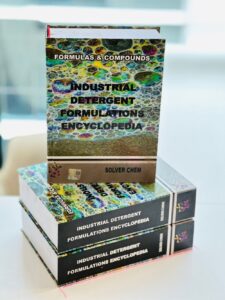
If you’re looking for formulations that actually work in real production conditions, this encyclopedia gives you practical, field-tested systems developed with decades of experience.
🔥 THE MOST COMMON MISTAKE IN DEGREASER FORMULATION
Many people try to develop a degreaser by simply mixing a few ingredients together.
In reality, this usually leads to:
- Weak cleaning performance
- Surface damage
- Stability problems
- Inconsistent results
👉 The problem is not the ingredients — it’s how they are combined.
What Is a Metal Degreaser?
A metal degreaser is a chemical product used to remove:
- Oil
- Grease
- Dirt
- Industrial residues
from metal surfaces.
It is typically used before:
- Painting
- Coating
- Assembly
- Maintenance
In simple terms, it prepares the surface for the next step.
Types of Metal Degreasers
Different situations require different types of formulations.
Water-Based Degreasers
These are the most common in industrial cleaning.
- Safer to handle
- Suitable for large-scale operations
- Often used in washing systems
Solvent-Based Degreasers
Used for heavier contamination.
- Fast acting
- Strong dissolving power
- Ideal for stubborn grease
Powder Degreasers
Widely used in industrial washing machines.
- High concentration
- Cost-effective
- Suitable for heavy-duty cleaning
For full powder system details:
👉 Powder Parts Washer Detergent | Formulation, Ingredients and Production Process
What Makes a Degreaser Work?
A good degreaser is not just one ingredient — it’s a balanced system.
Alkaline Components
These are the main cleaning agents.
- Sodium hydroxide
- Sodium carbonate
- Sodium metasilicate
They break down grease and oil effectively.
Surfactants
These help lift and remove contamination.
- Usually nonionic
- Low-foam for machine compatibility
Solvents (in some formulations)
They improve cleaning speed and performance.
Chelating Agents
Used to control water hardness.
- EDTA
- Phosphates
Additives
- Corrosion inhibitors
- Foam control agents
- Stabilizers
How Metal Degreasers Are Produced
The production process is relatively straightforward, but the balance is critical.
Typical steps include:
- Preparing raw materials
- Mixing alkaline components
- Adding surfactants under controlled conditions
- Incorporating additives
- Homogenizing the mixture
- Packaging
Even small formulation errors can affect performance significantly.
Common Problems in Real Production
In practice, many degreasers fail because of:
- Incorrect ratios
- Too aggressive formulations
- Poor surfactant selection
- Instability over time
These issues reduce product quality and customer satisfaction.
Why Formulation Experience Matters
On paper, many formulas look similar.
In reality, only a few actually work well.
A good degreaser must:
- Clean effectively
- Be safe for surfaces
- Stay stable over time
- Be cost-efficient
Achieving all of this requires real formulation experience.
💰 STOP WASTING TIME WITH TRIAL AND ERROR
Developing a degreaser from scratch can take months — and cost more than expected.
Many manufacturers go through repeated failures before finding a working formula.
👉 Instead, starting with proven formulations allows you to:
- Save time
- Reduce material waste
- Improve product consistency
- Enter production faster
The Industrial Detergent Formulations Encyclopedia gives you access to ready-to-use systems designed for real industrial applications.
Related Articles
-
Alkaline Metal Degreaser Formula | Ingredients and Production Process
-
Acidic Metal Degreaser | Formulation, Production and Industrial Applications
Concentrated Heavy Duty Alkaline Metal Degreaser | Formula and Production Guide
SUMMARY
Metal degreasers are essential for removing oil, grease, and industrial contamination from metal surfaces. Their performance depends heavily on how well the formulation is designed.
Even small mistakes in formulation can lead to poor cleaning results, instability, or unnecessary costs.
👉 This is why using tested and well-balanced formulations makes a major difference.
With the right formulation approach, you can produce reliable, high-performance degreasers and avoid the risks of trial-and-error development.