An acidic degreaser is often preferred when metal parts need both oil and grease removal and additional cleaning of rust, scale or surface deposits.
These products are commonly used on steel, iron and certain aluminum surfaces where ordinary alkaline cleaning may not be enough. A properly designed acidic degreasing system can clean the surface while also preparing the metal for the next production stage.
The performance of the product depends on more than the acid itself. Surfactants, emulsifying agents, corrosion inhibitors and selected acids must work together to remove contamination without causing unnecessary attack on the metal.
For manufacturers, the real challenge is finding the correct balance between cleaning power, metal protection, bath concentration and treatment time. This is why commercial acidic degreaser production requires a properly structured formulation rather than simply increasing acid strength.

Looking for Complete Acidic Degreaser Formulations?
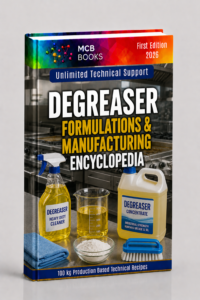
Developing a reliable acidic degreaser requires the right balance of acids, surfactants, emulsifiers, inhibitors and supporting raw materials.
The
Industrial Metal Degreasers Formulations & Manufacturing Encyclopedia
provides practical formulations and production guidance for professional metal cleaning and degreasing products, including acidic metal degreasers.
The encyclopedia is designed for manufacturers who need practical production information rather than general theory. It covers formulation structure, raw materials, production processes and technical product guidance for commercial manufacturing.
If you are developing acidic, alkaline or other industrial metal degreasers, this book gives you a practical starting point for building and expanding your product range.
How Acidic Degreasers Work
Acidic degreasing systems combine chemical cleaning and surface treatment in one process.
Depending on the application, formulations may contain acids such as phosphoric acid, sulfuric acid, hydrochloric acid or hydrofluoric acid, together with surfactants and emulsifying agents that help remove grease and oily contamination.
Acidic systems may operate at ambient temperature, but higher working temperatures can improve both degreasing and derusting performance in suitable processes.
Because these baths have a strongly acidic character, equipment and tank material must also be selected carefully. Stainless steel or suitable polypropylene equipment is commonly preferred depending on the formulation and operating conditions.
Bath Concentration and Treatment Time
The required working concentration depends on the level of grease, oil, rust and other contamination present on the metal surface.
In industrial applications, acidic degreasing baths may be prepared at different concentrations according to the cleaning requirement. Lower concentrations usually require longer treatment times, while stronger baths can provide faster cleaning but require tighter process control.
Two of the most important operating parameters are total acid level and treatment time.
A reduction in total acidity usually indicates that the active chemical concentration has decreased and chemical replenishment may be required. For this reason, bath control is important in continuous industrial operation.
The Role of Corrosion Inhibitors
Acidic cleaning must be strong enough to remove rust and scale but controlled enough to avoid excessive metal attack.
This is where corrosion inhibitors become important.
In suitable formulations, inhibitors help protect the exposed base metal after rust and scale have been removed. They can also help extend bath life and improve process control.
However, inhibitor use depends on the metal and the desired surface condition.
For some aluminum applications, an etched surface may actually be required before a subsequent coating or treatment process. In those cases, inhibitor selection and acid strength must be adjusted according to the production target.
Professional Acidic Degreaser Production
Commercial acidic degreaser development requires careful selection of acids, surfactants, emulsifiers, inhibitors and supporting raw materials.
The final formulation must be matched to the metal type, contamination level and intended cleaning process.
Using an established formulation can reduce unnecessary trial-and-error work and help manufacturers develop products with more consistent cleaning performance, bath stability and metal compatibility.
For manufacturers looking for complete industrial formulations, the
Industrial Metal Degreasers Formulations & Manufacturing Encyclopedia
provides practical formulation and production guidance for professional metal cleaning and degreasing products.