INTRODUCTION
Air freshener formulations are at the core of modern fragrance products used in homes, offices, and commercial environments. From spray systems to long-lasting ambient solutions, these products are designed to create a consistent and pleasant indoor atmosphere.
Many people search for air freshener production methods or simple recipes, but most of the available information does not reflect how real products are actually developed.
In practice, creating a successful air freshener is not just about mixing fragrance with a solvent.
It requires a well-balanced formulation system that ensures stability, performance, and long-lasting scent release in real conditions.
TYPES OF AIR FRESHENER SYSTEMS
Air fresheners are produced in different formats depending on their intended use:
- aerosol spray air fresheners
- trigger spray systems
- gel-based air fresheners
- reed diffusers
- solid fragrance blocks
Each system requires a different formulation approach to ensure proper scent diffusion and product stability.
KEY COMPONENTS OF AIR FRESHENER FORMULATIONS
A typical air freshener formulation includes:
- fragrance oils (main scent source)
- solvents (for dilution and dispersion)
- emulsifiers (for stability)
- fixatives (to extend fragrance life)
- stabilizers (to maintain product quality)
👉 The interaction between these components determines how the fragrance performs over time.
WHY SIMPLE FORMULAS FAIL
Many basic air freshener recipes found online are not suitable for real production.
They often result in:
- short-lasting fragrance
- instability or separation
- poor scent distribution
- inconsistent performance
👉 This is why professional formulation systems are essential.
FRAGRANCE PERFORMANCE AND STABILITY
The success of an air freshener depends on how the fragrance behaves in the formulation.
Key factors include:
- evaporation rate
- compatibility with solvents
- long-term stability
- scent diffusion efficiency
👉 These elements must be carefully balanced to achieve a high-quality product.
PRODUCTION OVERVIEW
A standard air freshener production process may include:
- preparation of solvent base
- controlled addition of fragrance oils
- mixing and homogenization
- stability adjustment
- filling and packaging
However, the production process alone is not enough without the correct formulation.
Note:
This article explains the structure and production concepts of air fresheners.
👉 The complete formulations, including exact ingredient ratios, fragrance systems, and production methods, are included in:
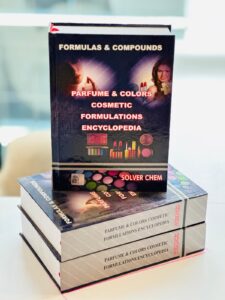
PERFUME AND COLOR COSMETICS FORMULATIONS ENCYCLOPEDIA
Create High-Quality Air Freshener Products
If you are serious about producing air fresheners, basic recipes are not enough.
✔ Professional fragrance formulations
✔ Stable and long-lasting scent systems
✔ Production-ready formulations
✔ Scalable product development
👉 Get access to complete fragrance formulation systems and start producing with confidence.
👉 View Full Formulations Encyclopedia
Limited Time: Access Professional Fragrance Formulations
Start creating high-quality air freshener products and avoid trial-and-error.
SUMMARY
Air freshener production requires more than simple mixtures. Real product performance depends on balanced formulation systems that ensure stability, scent longevity, and consistent quality. Professional formulations make the difference between basic products and market-ready solutions.