BEST FRUIT RIPENING CHEMICALS AND FORMULATION
TECHNIQUES FOR AGRICULTURE INDUSTRY
 In modern agriculture, the use of fruit ripening chemicals and advanced formulation techniques has become essential for ensuring consistent quality, improved shelf life, and efficient supply chain management. As global demand for fresh produce continues to grow, agricultural producers and manufacturers rely on scientifically developed fruit ripening systems to control and standardize the maturation process. Understanding the best fruit ripening chemicals and formulation strategies is critical for achieving commercial success in this competitive industry.
Among the most widely used fruit ripening chemicals is ethephon, a compound that releases ethylene gas when metabolized by plant tissues. Ethylene is a natural plant hormone responsible for initiating and regulating the ripening process. Ethephon-based formulations are highly preferred in the agriculture industry due to their stability, ease of application, and predictable performance. They are commonly used in crops such as bananas, tomatoes, mangoes, and avocados, where uniform ripening is essential for market readiness.
In addition to ethephon, alternative ripening systems include ethylene gas application in controlled chambers and safer substitutes for traditional calcium carbide methods. While calcium carbide has historically been used for fruit ripening, its safety concerns have led to stricter regulations and a shift toward more controlled and environmentally friendly solutions. Modern formulations focus on delivering precise ethylene release while maintaining product safety and compliance with international agricultural standards.
The effectiveness of fruit ripening chemicals is closely linked to formulation techniques. A well-designed formulation includes not only the active ingredient but also stabilizers, buffering agents, and surfactants. Stabilizers prevent premature decomposition of the active compound, while buffering agents maintain the optimal pH level required for stability. Surfactants improve surface coverage and enhance penetration, ensuring that the ripening agent performs efficiently on the fruit surface. The compatibility of these components is crucial to achieving long shelf life and consistent performance.
Industrial formulation processes involve controlled mixing, pH adjustment, and temperature regulation to maintain the integrity of the active ingredient. Homogeneous blending ensures uniform distribution of all components, while quality control procedures such as filtration and stability testing guarantee that the final product meets commercial standards. These processes are essential for large-scale production and help manufacturers deliver reliable products to the market.
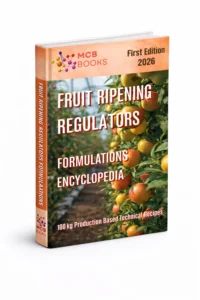
For agricultural manufacturers and formulation specialists, mastering both the selection of fruit ripening chemicals and the formulation techniques is key to developing high-performance products. The Fruit Ripening Regulators Formulations Encyclopedia provides detailed, ready-to-use industrial formulations based on 100 kg production systems, including raw material specifications and step-by-step processes. This resource enables professionals to accelerate product development and confidently scale their operations in the agricultural chemicals sector.