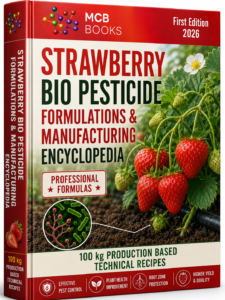
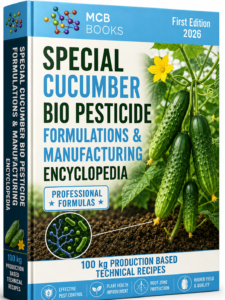
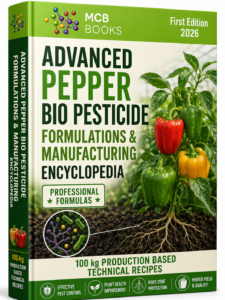
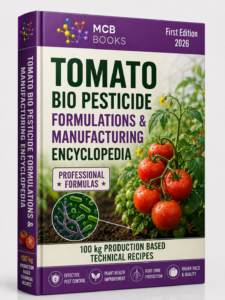
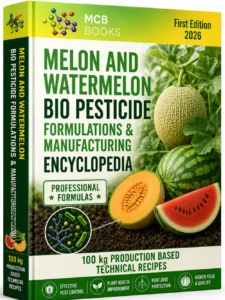
 Melon and watermelon crops are economically important horticultural products grown extensively in open fields and greenhouse systems. However, these crops are highly susceptible to numerous insect pests, mites, fungal diseases, soil-borne pathogens and other biological problems that can reduce plant vigor, fruit quality and overall yield. The Melon and Watermelon Bio Pesticide Formulations & Manufacturing Encyclopedia provides a comprehensive technical resource for developing biological pest and disease control products specifically designed for melon and watermelon production.
Bio pesticides are increasingly preferred in modern agriculture because they can support effective crop protection while helping reduce dependence on conventional synthetic pesticides. Biological formulations may contain beneficial microorganisms, microbial metabolites, botanical extracts, natural oils, organic acids, mineral-based materials and other biologically derived active components. These ingredients can be formulated into products targeting aphids, whiteflies, thrips, mites, caterpillars and other common pests affecting cucurbit crops.
Disease management is another important part of melon and watermelon production. Powdery mildew, downy mildew, Fusarium wilt, Pythium root rot, Rhizoctonia diseases, Botrytis and other fungal or soil-borne diseases can significantly damage plants under favorable environmental conditions. Properly designed bio fungicide and microbial formulations may help suppress pathogens, strengthen root-zone microbial balance and support healthier plant development.
The encyclopedia focuses on the practical formulation and manufacturing principles required to produce commercial bio pesticide products. It covers the selection of active biological ingredients, carriers, stabilizers, wetting agents, dispersing agents, preservatives, emulsifiers and other formulation auxiliaries. Understanding the compatibility of these materials is essential for maintaining biological activity, physical stability and satisfactory shelf life.
Manufacturing procedures are also important for obtaining consistent products. Mixing sequence, water quality, pH control, temperature management, homogenization, filtration and packaging conditions can directly influence the performance of a finished bio pesticide. Microbial products require particularly careful processing because excessive heat, unsuitable pH or incompatible chemicals may reduce microorganism viability.
The book also provides practical guidance for developing liquid, suspension, soluble and other agricultural formulations suitable for foliar spraying, drip irrigation and soil application. Different formulation strategies can be designed according to the pest or disease target, crop growth stage and production system.
For agricultural manufacturers, formulation specialists, technical consultants, researchers and entrepreneurs, the Melon and Watermelon Bio Pesticide Formulations & Manufacturing Encyclopedia offers a practical approach to biological crop protection product development. By combining formulation science, manufacturing methods, raw material selection and application principles, the encyclopedia serves as a valuable reference for producing modern bio pesticide solutions for healthier melon and watermelon crops, improved crop quality and more sustainable agricultural production.