 Trichoderma biopesticide formulations are widely used in biological crop protection programs to help suppress a range of soil-borne and plant pathogenic fungi. Trichoderma species are beneficial fungi that can colonize the rhizosphere, interact with plant roots, compete with harmful microorganisms, and contribute to improved biological disease management. For manufacturers developing sustainable agricultural products, properly formulated Trichoderma-based biopesticides can provide an important alternative or complement to conventional crop protection systems.
Several Trichoderma species are used in agricultural biological control products, including Trichoderma harzianum, Trichoderma viride, Trichoderma asperellum, and Trichoderma atroviride. Different strains may vary considerably in their biological activity, environmental adaptability, target pathogens, shelf life, and formulation requirements. Therefore, strain selection is one of the most important stages in the development of an effective commercial Trichoderma biopesticide.
The biological activity of Trichoderma is associated with several mechanisms. These beneficial fungi can compete with plant pathogens for nutrients and colonization sites, produce enzymes and metabolites that inhibit undesirable microorganisms, and in some cases directly interact with pathogenic fungi through mycoparasitism. Certain strains can also colonize the root environment and contribute to plant defense responses. These combined mechanisms make Trichoderma an important microorganism for biological disease management.
Commercial Trichoderma biopesticide formulations can be developed as wettable powders, water-dispersible powders, granules, liquid suspensions, concentrated microbial preparations, and other carrier-based agricultural products. The formulation type should be selected according to the microorganism, target crop, intended application method, production system, storage requirements, and desired shelf life.
A professional Trichoderma formulation usually contains more than the fungal active material. Depending on the product, manufacturers may use suitable carriers, fillers, wetting agents, dispersants, stabilizers, protective materials, suspending agents, anti-caking agents, moisture-control materials, and other compatible formulation ingredients. These raw materials help protect fungal spores, improve product handling, support homogeneous distribution, and facilitate dilution or application in the field.
For powder formulations, carrier selection is particularly important. The carrier should have appropriate particle size, moisture content, flowability, and compatibility with the fungal spores. Excessive moisture or unfavorable storage conditions may reduce viability or encourage contamination. Wetting and dispersing agents can also improve the ability of the powder to mix uniformly with water before application.
In liquid Trichoderma formulations, maintaining microbial viability and physical stability can be more challenging. The formulation must provide an environment that protects spores or other propagules while preventing excessive sedimentation, separation, or unwanted microbial activity during storage. Appropriate suspending agents, stabilizers, and compatible liquid carriers may therefore be required.
The manufacturing process generally includes microbial cultivation, biomass or spore production, harvesting, concentration, formulation, stabilization, drying where applicable, blending, quality control, filling, and packaging. Trichoderma can be produced using different fermentation or cultivation systems depending on the strain and industrial process. Temperature, aeration, nutrient availability, moisture, pH, and contamination control must be carefully managed throughout production.
Quality control is essential in commercial Trichoderma biopesticide manufacturing. Important parameters may include viable spore count, microbial purity, contamination level, moisture content, pH, particle size, wettability, dispersibility, suspension properties, storage stability, and biological activity. Regular quality testing helps manufacturers maintain consistent performance between production batches.
Trichoderma-based biopesticides may be used in seed treatment, soil treatment, root-zone application, nursery production, fertigation-compatible systems, and other crop-specific programs depending on the product registration and formulation type. Correct application timing and suitable environmental conditions are important because Trichoderma is a living biological agent that must successfully establish or remain active in the target environment.
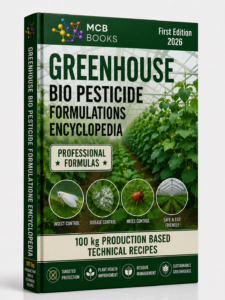
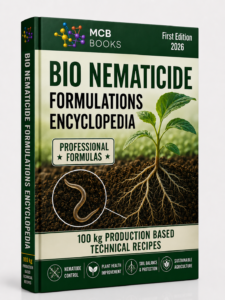
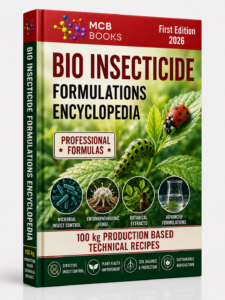
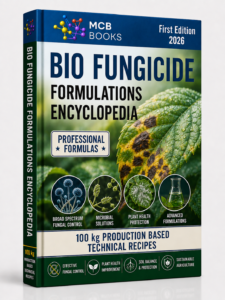
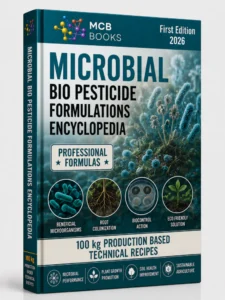
The MICROBIAL BIO PESTICIDE FORMULATIONS ENCYCLOPEDIA provides practical technical information for companies interested in developing Trichoderma and other microbial crop protection products. It covers formulation principles, raw material functions, manufacturing methods, production processes, technical characteristics, and commercial product development concepts.
For biopesticide manufacturers, agricultural input producers, formulation specialists, R&D departments, biological control companies, entrepreneurs, and investors, understanding Trichoderma formulation technology is an important step toward developing reliable biological disease-control products. Properly designed Trichoderma biopesticide formulations can transform beneficial fungal strains into stable, practical, and commercially applicable products for modern sustainable agriculture.