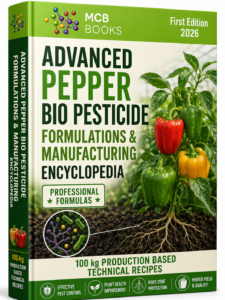
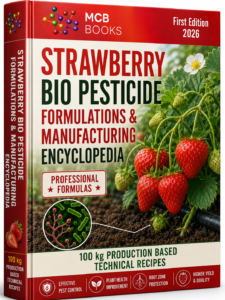
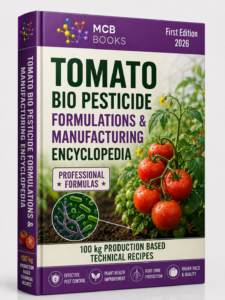
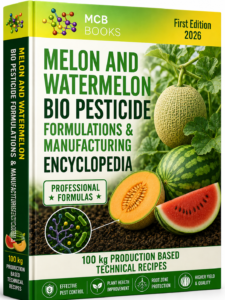
 The increasing demand for sustainable crop protection has created important opportunities for companies interested in commercial bio nematicide production. Plant-parasitic nematodes can damage root systems, reduce nutrient and water uptake, weaken plant development, and lower crop productivity. Biological nematicides are therefore becoming an increasingly important part of integrated crop protection programs. Manufacturing an effective commercial bio nematicide requires careful selection of active biological components, suitable formulation ingredients, controlled production methods, quality testing, and appropriate packaging.
The first stage in bio nematicide manufacturing is defining the target nematode and agricultural application. Products may be developed for root-knot nematodes, cyst nematodes, lesion nematodes, and other plant-parasitic species affecting vegetables, fruits, cereals, greenhouse crops, and field crops. The intended application method, such as soil treatment, root-zone application, drip irrigation, fertigation, or seed treatment, also influences formulation design.
Commercial biological nematicides may contain beneficial microorganisms, microbial metabolites, naturally derived active materials, or other compatible biological components. Depending on the selected system, manufacturers may need carriers, stabilizers, wetting agents, dispersing agents, suspending agents, fillers, protective materials, rheology modifiers, anti-caking agents, and other functional formulation ingredients. These components help improve physical stability, product handling, dilution, distribution in soil, and storage performance.
Bio nematicides can be manufactured in different forms, including liquid concentrates, suspension formulations, soluble or dispersible powders, granules, and formulations designed specifically for irrigation systems. Liquid products require careful control of sedimentation, viscosity, pH, and redispersibility. Powder and granular products require attention to moisture content, particle size, flowability, wettability, and storage stability.
The manufacturing process may include raw material preparation, controlled mixing, dispersion, homogenization, stabilization, filtration where necessary, filling, and packaging. If living microorganisms are used, production may also involve fermentation, cultivation, harvesting, concentration, or spore preparation before formulation. Processing temperature, pH, moisture, oxygen exposure, and mechanical stress must be controlled to avoid reducing biological activity.
Quality control is essential in professional bio nematicide production. Depending on the formulation, manufacturers may evaluate pH, viscosity, moisture, particle size, suspension stability, dispersibility, microbial viability, contamination levels, biological activity, storage stability, and packaging compatibility. Consistent batch quality is necessary for reliable commercial production.
Packaging should protect the formulation against conditions that could reduce product stability, including excessive heat, humidity, light, or oxygen. Shelf-life studies and suitable storage recommendations are also important before commercial distribution.
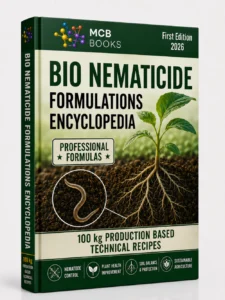
The BIO NEMATICIDE FORMULATIONS ENCYCLOPEDIA provides practical technical information for manufacturers, agricultural input companies, formulation specialists, R&D departments, entrepreneurs, and investors interested in developing biological nematode-control products. By combining formulation principles, raw material functions, production methods, and professional agricultural applications, it provides a strong technical foundation for the development of stable and commercially applicable bio nematicide formulations for modern agriculture.