 Beauveria bassiana and Metarhizium biopesticide formulations are important tools in biological insect pest control and sustainable crop protection. These entomopathogenic fungi can infect susceptible insect pests and are used in microbial pesticide products developed for agricultural, horticultural, and integrated pest management applications. For manufacturers, producing stable and effective fungal biopesticides requires careful control of strain selection, spore quality, formulation ingredients, manufacturing conditions, storage stability, and application performance.
Beauveria bassiana and species of Metarhizium, including Metarhizium anisopliae, are naturally occurring fungi with insect-pathogenic activity. Their spores can attach to the surface of susceptible insects, germinate under suitable environmental conditions, and penetrate the insect cuticle. The fungus then develops inside the host, ultimately causing insect mortality. Because this infection process does not depend on the insect ingesting the product, these fungi can provide a different mode of action from many conventional insecticides.
The effectiveness of a commercial fungal biopesticide depends heavily on the selected strain. Different strains may vary in host range, virulence, environmental tolerance, sporulation capacity, storage stability, and compatibility with formulation ingredients. Therefore, strain selection and quality characterization are fundamental stages in the development of professional Beauveria bassiana and Metarhizium formulations.
Commercial products may be prepared in several formulation forms, including wettable powders, water-dispersible powders, oil dispersions, suspension formulations, granules, and other carrier-based systems. The appropriate formulation depends on the fungal strain, target insect, crop, intended application method, environmental conditions, and required shelf life.
A professional formulation generally includes more than fungal spores alone. Suitable carriers, fillers, wetting agents, dispersing agents, suspending agents, stabilizers, protective materials, anti-caking agents, oil carriers, and moisture-control ingredients may be required to improve product performance. These materials help maintain spore viability, improve handling, support homogeneous distribution, and facilitate field application.
Oil-based formulations can be particularly useful for certain entomopathogenic fungi because they may improve adhesion of spores to insect surfaces and can support application under specific environmental conditions. Powder formulations, on the other hand, require careful control of moisture, particle size, flowability, wettability, and dispersibility. Each formulation type must be optimized without reducing fungal viability.
The manufacturing process may involve fungal cultivation, spore production, harvesting, concentration, drying where necessary, blending with carriers, stabilization, formulation, quality control, filling, and packaging. Depending on the microorganism and production strategy, fungal biomass and spores can be produced through solid-state fermentation, liquid fermentation, or other controlled cultivation systems.
During production, parameters such as temperature, humidity, nutrient composition, aeration, incubation time, contamination control, and drying conditions must be carefully managed. Excessive heat, high moisture, unsuitable pH, or incompatible chemicals may reduce spore viability and negatively affect final product performance.
Quality control is one of the most important parts of commercial fungal biopesticide production. Manufacturers may evaluate viable spore concentration, germination rate, microbial purity, contamination levels, moisture content, particle size, dispersibility, suspension characteristics, physical stability, biological activity, and storage stability. Consistent specifications are essential for maintaining reliable performance between production batches.
Beauveria bassiana and Metarhizium-based products may be used against various insect pests depending on the fungal strain, approved product use, crop, and regional registration. They can form part of integrated pest management programs, where biological control methods are combined with cultural, mechanical, and other compatible crop protection practices.
Environmental conditions strongly influence fungal activity. Temperature, relative humidity, ultraviolet exposure, rainfall, application timing, and coverage can all affect performance. For this reason, formulation design should not only protect the spores during storage but also support their survival and activity after application.
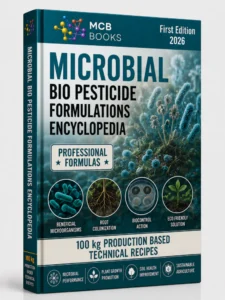
The MICROBIAL BIO PESTICIDE FORMULATIONS ENCYCLOPEDIA provides practical technical information for companies interested in manufacturing entomopathogenic fungal biopesticides. It covers formulation principles, raw material functions, production methods, manufacturing procedures, quality parameters, technical properties, and commercial product development.
For biopesticide manufacturers, biological control companies, agricultural input producers, formulation specialists, R&D departments, entrepreneurs, and investors, understanding Beauveria bassiana and Metarhizium formulation technology can provide a valuable foundation for developing modern biological insect-control products. Well-designed fungal biopesticide formulations can transform viable entomopathogenic fungi into stable, practical, and commercially applicable crop protection solutions for sustainable agriculture.