 Granular NPK fertilizer ratios indicate the percentages of nitrogen, phosphorus, and potassium contained in the finished product. Understanding these ratios is essential for fertilizer manufacturers, agricultural engineers, farmers, researchers, and entrepreneurs who want to select or produce suitable plant nutrition products. Different crops and growth stages require different nutrient balances, which is why commercial fertilizer markets include balanced grades, nitrogen-rich products, potassium-rich formulas, and customized NPK blends.
NPK 15-15-15 is one of the most widely recognized balanced granular fertilizer grades. It contains equal percentages of nitrogen, phosphorus, and potassium, making it suitable for general plant nutrition in many field crops, vegetables, orchards, and landscaping applications. Nitrogen supports vegetative growth, phosphorus encourages root development and energy transfer, while potassium contributes to water regulation, crop quality, and stress resistance. However, application rates should always be determined according to soil analysis, crop requirements, and local agricultural conditions.
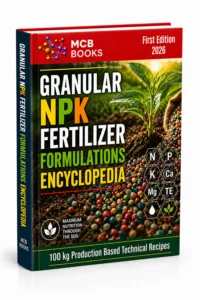
NPK 20-10-10 contains a higher nitrogen level and is commonly considered for crops requiring strong leaf, stem, and vegetative development. This ratio may be useful during early growth stages or in production systems where nitrogen demand is relatively high. Careful formulation is necessary because excessive nitrogen may encourage unnecessary vegetative growth, delay maturity, or reduce nutrient balance. The GRANULAR NPK FERTILIZER FORMULATIONS ENCYCLOPEDIA helps producers understand how nitrogen, phosphate, and potassium sources can be combined to develop different commercial fertilizer grades.
NPK 12-12-17 provides a higher potassium percentage than nitrogen and phosphorus. Potassium-rich fertilizers are often selected for flowering, fruit development, crop quality, sugar formation, color improvement, and resistance to environmental stress. This ratio can be adapted for vegetables, fruit crops, greenhouse production, and other high-value agricultural applications. Additional nutrients such as magnesium, sulfur, zinc, boron, iron, or manganese may also be incorporated according to crop requirements.
Custom NPK blends allow fertilizer manufacturers to create products for specific crops, soils, climates, and application programs. Examples may include starter fertilizers with increased phosphorus, vegetative formulas with higher nitrogen, or fruiting-stage products containing more potassium. Chloride-sensitive crops may require potassium sulfate instead of potassium chloride, while sulfur-demanding crops may benefit from ammonium sulfate or sulfate-based potassium sources.
The GRANULAR NPK FERTILIZER FORMULATIONS ENCYCLOPEDIA provides practical guidance on raw material selection, nutrient calculations, granulation methods, production procedures, and product specifications. Correct formulation must consider raw material purity, nutrient concentration, compatibility, moisture, granule hardness, particle size, caking tendency, and storage stability.
Developing successful granular NPK ratios requires both agronomic knowledge and controlled manufacturing. The GRANULAR NPK FERTILIZER FORMULATIONS ENCYCLOPEDIA is a valuable technical reference for businesses seeking to manufacture balanced grades such as 15-15-15, nitrogen-rich grades such as 20-10-10, potassium-focused products such as 12-12-17, and customized blends for specialized agricultural markets.