Introduction
Urea fertilizer is one of the most widely used nitrogen fertilizers in modern agriculture. It contains a high concentration of nitrogen and plays a crucial role in improving crop productivity and plant growth. Due to its high nitrogen content and relatively low production cost, urea fertilizer has become one of the most commonly produced fertilizers in the global agricultural industry.
Nitrogen is an essential nutrient required for plant development, leaf formation, and protein synthesis. Urea fertilizers provide an efficient nitrogen source for a wide range of agricultural crops including cereals, vegetables, and fruits.
The general principles of fertilizer manufacturing are explained in the NPK Fertilizer Production Process guide, while the industrial systems used in fertilizer manufacturing are discussed in the NPK Fertilizer Production Line article.
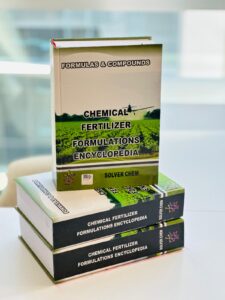
Detailed industrial fertilizer formulations and fertilizer production technologies are explained in the Chemical Fertilizers Formulations Encyclopedia.
What is Urea Fertilizer
Urea fertilizer is a nitrogen-based fertilizer that contains approximately 46% nitrogen, making it one of the most concentrated solid nitrogen fertilizers available.
Urea is highly soluble in water and can be applied in different agricultural systems including soil fertilization and fertigation. Due to its high nutrient content and economic production process, urea is widely used in both small-scale farming and large agricultural operations.
Raw Materials Used in Urea Production
The industrial production of urea fertilizer requires two primary raw materials:
-
ammonia (NH₃)
-
carbon dioxide (CO₂)
Ammonia is typically produced through the Haber-Bosch process, while carbon dioxide is often obtained as a by-product of ammonia production plants.
These raw materials react under high pressure and temperature to produce urea.
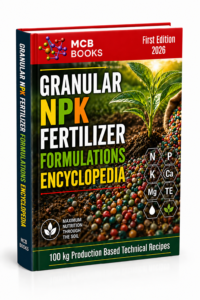
🚀 WANT TO PRODUCE COMMERCIAL FERTILIZERS?
Modern fertilizer production requires more than simple nutrient blending. Professional fertilizer systems must provide balanced nutrition, stable granulation, efficient nutrient release, and reliable crop performance.
The GRANULAR NPK FERTILIZER FORMULATIONS ENCYCLOPEDIA
includes industrial fertilizer formulations, production methods, raw material systems, and commercial manufacturing knowledge designed for modern fertilizer producers.
✔ Professional granular fertilizer systems
✔ Industrial production methods
✔ Commercial fertilizer formulations
✔ Raw materials and manufacturing guidance
✔ Modern agricultural fertilizer technologies
👉 Start developing professional fertilizer products for commercial agriculture.
Urea Fertilizer Production Process
The industrial manufacturing of urea fertilizer involves several chemical and mechanical stages.
Ammonium Carbamate Formation
The production process begins with the reaction of ammonia and carbon dioxide under high pressure conditions. This reaction forms an intermediate compound known as ammonium carbamate.
Urea Synthesis
Ammonium carbamate is then converted into urea and water through a dehydration reaction inside the reactor system.
Concentration
The resulting urea solution is concentrated through evaporation systems to increase the urea content.
Granulation or Prilling
The concentrated urea is converted into solid fertilizer particles through either prilling or granulation processes. These solid forms improve handling, storage, and fertilizer application efficiency.
Advantages of Urea Fertilizer
Urea fertilizers provide several advantages in modern agriculture:
-
high nitrogen concentration
-
cost-effective fertilizer production
-
efficient nutrient availability
-
suitable for a wide range of crops
These characteristics make urea one of the most widely produced fertilizers in the global fertilizer industry.
Industrial Fertilizer Formulations Guide
Detailed fertilizer formulations and industrial fertilizer production technologies are explained in the Chemical Fertilizers Formulations Encyclopedia. This professional guide provides practical information about fertilizer formulation development and fertilizer manufacturing technologies.
Modern urea plants are usually integrated with ammonia plants in order to improve energy efficiency and reduce production costs.
SUMMARY
Urea fertilizer is one of the most important nitrogen fertilizers used in modern agriculture. It is produced through the reaction of ammonia and carbon dioxide under high pressure conditions. The production process includes ammonium carbamate formation, urea synthesis, concentration, and granulation or prilling stages.
Related Articles
NPK Fertilizer Production Process
NPK Fertilizer Production Line
NPK Fertilizer Production Cost
Compound NPK Fertilizer Production Process
Water Soluble NPK Fertilizer Production Process
How to Make NPK Fertilizer
How to Make NPK 20-20-20 Fertilizer
How to Make NPK 15-15-15 Fertilizer
How to Make NPK 10-10-10 Fertilizer
How to Make NPK 12-12-17 Fertilizer
How to Make NPK 19-19-19 Fertilizer