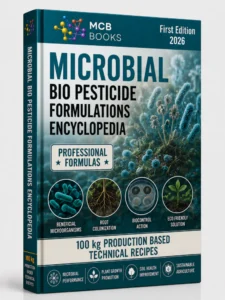
 The growing use of biological crop protection products has increased demand for practical and stable liquid and powder microbial biopesticide formulations suitable for professional agricultural applications. Microbial biopesticides contain beneficial microorganisms that can help control insect pests, plant pathogens, and other harmful organisms through biological mechanisms. For commercial manufacturers, selecting the correct formulation type is essential for maintaining microbial viability, storage stability, ease of application, and consistent field performance.
Microbial biopesticides may contain microorganisms such as Bacillus thuringiensis, Bacillus subtilis, Trichoderma species, Beauveria bassiana, Metarhizium species, and other biological control agents. Each microorganism has different requirements regarding moisture, pH, oxygen, temperature, carrier compatibility, and storage conditions. For this reason, liquid and powder formulations must be designed specifically according to the biological characteristics of the selected microbial strain.
LIQUID MICROBIAL BIOPESTICIDE FORMULATIONS
Liquid microbial biopesticides are widely used because they can be easy to measure, dilute, mix, and apply through conventional agricultural spraying or irrigation systems. Depending on the microorganism and intended use, liquid products may be prepared as microbial suspensions, concentrated liquid formulations, oil-based dispersions, or other suitable systems.
A liquid microbial biopesticide formulation may contain the active microbial component together with suspending agents, dispersing agents, stabilizers, protective materials, rheology modifiers, wetting agents, compatible carriers, and other formulation additives. These ingredients help maintain a uniform distribution of microbial particles and reduce problems such as rapid sedimentation, phase separation, or poor redispersibility.
One of the main technical challenges in liquid formulations is maintaining biological stability during storage. Microbial cells or spores may be affected by inappropriate pH, excessive water activity, oxidation, unsuitable preservatives, or prolonged exposure to high temperatures. The formulation system should therefore provide adequate physical stability without negatively affecting microbial viability.
Viscosity is another important parameter. If the product is too thin, microbial particles may settle rapidly. If it is excessively viscous, pouring, pumping, dilution, and spraying can become difficult. A properly balanced liquid formulation should remain stable while still being easy to handle and redistribute before use.
POWDER MICROBIAL BIOPESTICIDE FORMULATIONS
Powder microbial biopesticides are another important commercial product category. They may be produced as wettable powders, water-dispersible powders, dry microbial concentrates, carrier-based powders, or other suitable dry formulations.
Powder formulations typically combine microbial spores or other stable biological materials with carriers, fillers, wetting agents, dispersants, anti-caking agents, protective materials, and moisture-control ingredients. The carrier plays an especially important role because it influences flowability, particle distribution, microbial stability, packaging behavior, and final field application.
Moisture control is critical in dry microbial formulations. Excessive humidity can reduce shelf life, encourage unwanted contamination, cause caking, or initiate premature biological activity. At the same time, aggressive drying processes can damage microorganisms and reduce their viability. Therefore, drying conditions and final moisture levels must be carefully controlled.
Good wettability and dispersibility are particularly important when a powder product is intended to be diluted in water. A professional formulation should wet rapidly, disperse uniformly, and avoid excessive floating particles, lumps, or persistent sediment. This improves tank preparation and helps provide more consistent application in the field.
LIQUID VS. POWDER MICROBIAL BIOPESTICIDES
Choosing between liquid and powder microbial biopesticide formulations depends on several factors. Liquid formulations may offer convenient dosing, rapid dilution, and easier application, while powder formulations can provide advantages in transportation, reduced packaging weight, and, for certain microorganisms, improved storage stability.
The final choice should consider the microbial strain, biological activity, application method, climate, target crop, storage requirements, production equipment, packaging system, and desired shelf life. In many cases, the same microorganism can be commercialized in more than one formulation type for different agricultural markets.
Quality control is essential for both liquid and powder products. Manufacturers may evaluate viable microbial count, spore concentration, germination rate, purity, contamination levels, pH, moisture content, viscosity, particle size, suspension stability, wettability, dispersibility, biological activity, and storage stability.
Packaging should also be selected according to formulation type. Liquid products may require containers resistant to leakage, oxygen transfer, or light exposure, while powders often require moisture-resistant packaging with reliable sealing systems. Proper storage conditions should be established through stability studies.
The MICROBIAL BIO PESTICIDE FORMULATIONS ENCYCLOPEDIA provides practical technical information for companies developing professional microbial crop protection products. It covers liquid and powder formulation principles, raw material functions, production methods, stabilization systems, manufacturing procedures, quality specifications, and commercial product development.
For biopesticide manufacturers, agricultural input companies, formulation specialists, R&D departments, biological control companies, entrepreneurs, and investors, understanding the differences between liquid and powder microbial biopesticides is an important part of successful product development. Well-designed formulations can help convert sensitive microbial active ingredients into stable, practical, and commercially applicable products for professional agricultural use.